
Wasps vs Bees vs Hornets
How to Tell Them Apart in London

Before treating anything nesting in your loft, shed, or garden, it’s worth confirming what you’re actually dealing with — the three most commonly confused flying insects in London need very different responses.
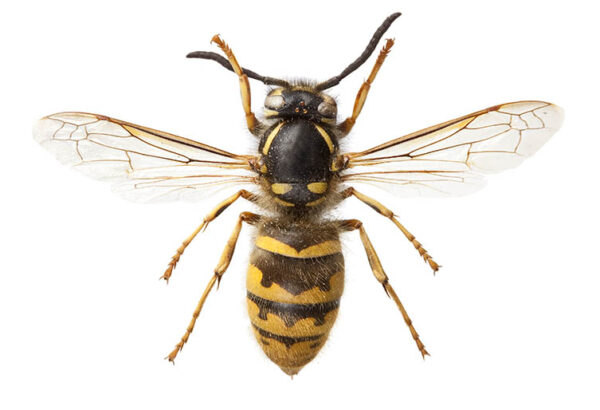
Common Wasp

common wasp identification London

  • Appearance: Bright yellow and black banding, smooth (not fuzzy) body, roughly 12-17mm
  • Nest: Grey, papery, football-shaped, often in lofts, wall cavities, sheds, or underground in old rodent burrows
  • Behaviour: Can sting repeatedly, becomes noticeably more aggressive in late summer/early autumn as natural food sources decline

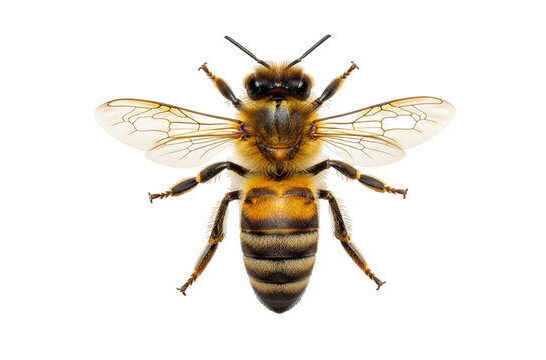
Honeybee

  • Appearance: Smaller, fuzzier, golden-brown with less contrast than a wasp’s markings
  • Nest: Rarely nests in the open — usually inside a cavity (chimney, wall void) or, if you can see the comb, it’s likely a wild colony worth protecting rather than removing
  • Behaviour: Generally docile away from the hive, and can only sting once (they die afterward) — very different risk profile to a wasp

Honeybee colonies are ecologically important and, where possible, should be relocated rather than exterminated — a very different approach from wasp nest treatment.
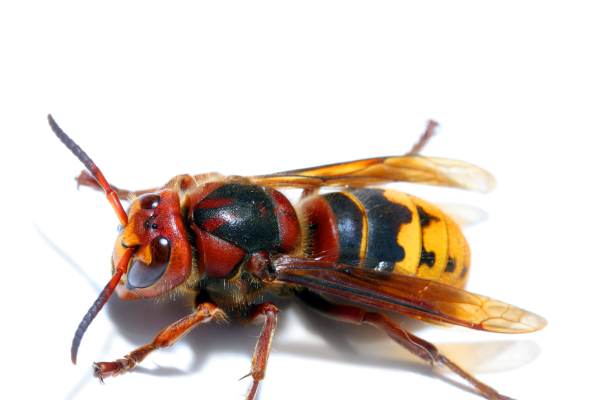
European Hornet

European hornet identification UK

  • Appearance: Noticeably larger than a wasp (25-35mm), reddish-brown thorax with yellow-and-black abdomen
  • Nest: Hollow trees, hedgerows, occasionally quiet lofts — less commonly found in dense urban settings than wasps, but present across London’s greener areas
  • Behaviour: Despite the size, European hornets are generally more docile than common wasps and rarely sting unless the nest itself is directly disturbed

Why This Distinction Actually Matters

  • Wasps: straightforward professional treatment, no ecological reason to preserve the colony
  • Honeybees: protected in practice — a beekeeper-led relocation is the right approach, not extermination
  • European hornets: beneficial predators of garden pests; treatment is generally only recommended if the nest is in a genuinely high-traffic, high-risk location, not as a default response to a sighting

A Note on Asian Hornets

The invasive Asian hornet is a serious concern in parts of Europe but is not currently established in the UK, thanks to an active monitoring and extermination protocol. If you believe you’ve spotted one specifically (smaller than the European hornet, with dark abdomen and yellow leg tips), this should be reported rather than treated as a standard call-out — see the National Bee Unit’s Asian hornet reporting guidance.


Extermination Process

The Extermination process includes a thorough inspection of your property, sealing off entry points to stop future infestations, using safe and effective pesticides and rodenticides, and providing a warranty.


Say goodbye to unwanted pests — schedule your inspection now

Lorem ipsum dolor sit amet, consectetur adipiscing elit. Ut elit tellus, luctus nec ullamcorper mattis, pulvinar dapibus leo.

Frequently asked questions

Send us a photo if it's safe to take one from a distance, or describe the size, colour, and location — we can usually narrow it down before a technician visits, and will always confirm before treating.

Very rarely as extermination — if a colony is somewhere genuinely unsafe (inside a wall directly above a bed, for example), a specialist relocation is the appropriate route, not standard pest treatment.

Correct — European hornets are naturally less aggressive than common wasps and provide real pest control benefit in gardens, so treatment is usually only recommended when the nest location poses a genuine risk.

Hornet nests tend to be built in more sheltered spots like hollow trees, while common wasp nests are more likely to appear in exposed cavities like lofts and sheds — size alone isn't always reliable, so location and the insects themselves are better clues.