
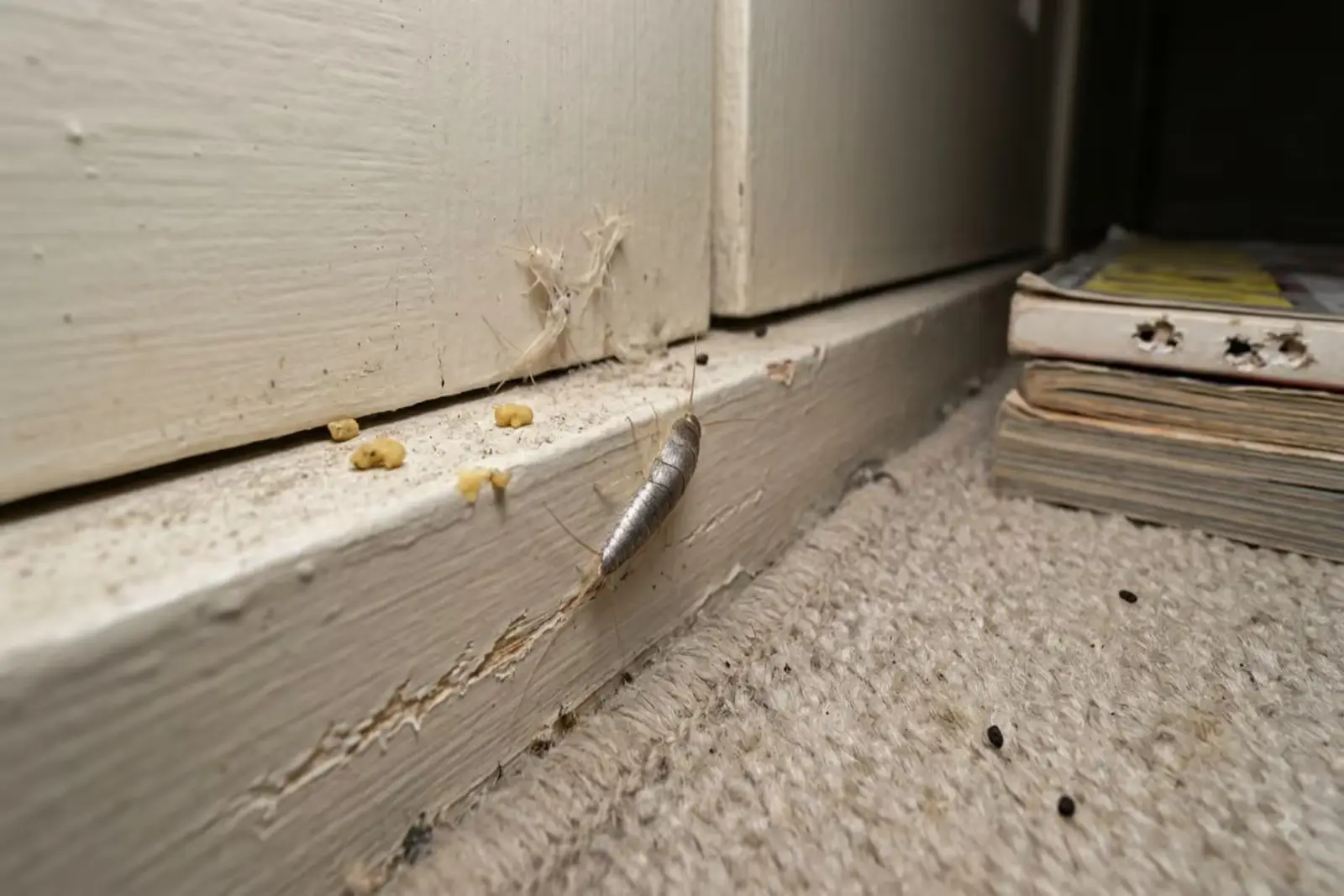
Silverfish Control London
- Same-day and next-day visits
- BPCA certified technicians
- Free revisit within 60 days
Get a free silverfish control quote
We call you back within 15 minutes, day or night. Quotes are free.
Silverfish don’t bite and don’t spread disease, but they’re a genuine nuisance once established - and their presence is often a sign of an underlying damp or humidity issue worth addressing alongside treatment. They’re most commonly found in bathrooms, kitchens, basements, and lofts, anywhere consistent moisture gives them the environment they need to thrive.
Signs of a silverfish infestation
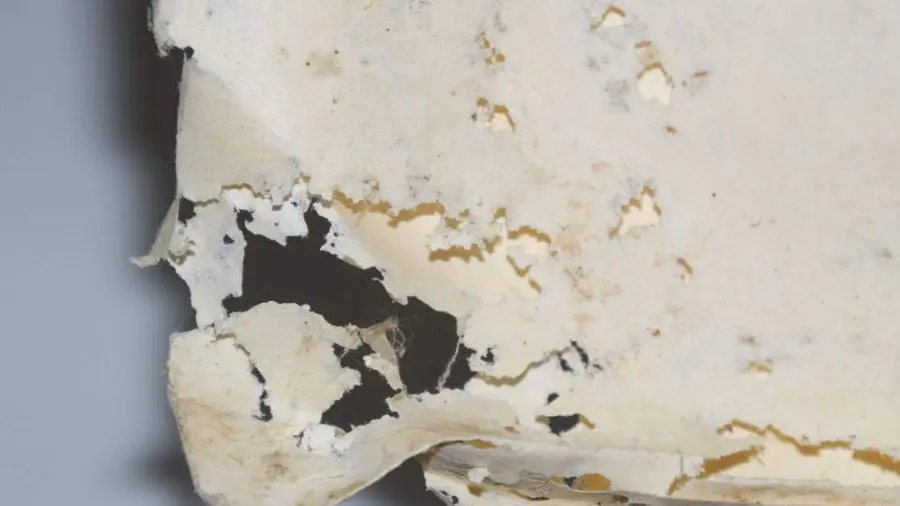
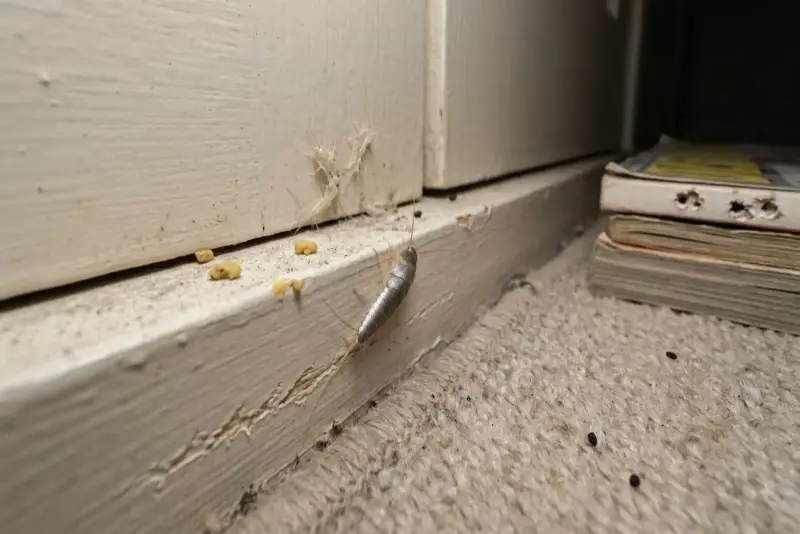
- Small, silvery, fish-shaped insects seen scurrying away quickly when a light is switched on, usually at night
- Small irregular holes or “notches” in paper, cardboard, book bindings, or wallpaper glue
- Yellowish stains or tiny black droppings (pepper-like specks) near skirting boards or in cupboards
- Consistently damp or humid conditions in the affected room - silverfish rarely establish in genuinely dry spaces
Why silverfish keep coming back
Treating visible silverfish without addressing the underlying moisture almost always means the problem returns. Silverfish need consistent humidity to survive and reproduce, so a bathroom with poor ventilation, a leaking pipe under a kitchen sink, or a damp loft will keep attracting new activity even after a treatment kills the current population.
Our Silverfish Control Process
- Inspection: identifying affected rooms, likely harbourage points (behind skirting, under baths, in loft insulation), and any obvious moisture sources.
- Treatment: residual insecticide spray targeted at cracks, crevices, and known hiding spots.
- Moisture and prevention advice: practical guidance on ventilation, dehumidifying, and fixing any damp sources identified during inspection, since this is what actually stops recurrence.
- Follow-up, where the infestation is more established, to confirm activity has stopped.
What does silverfish control cost in London?
Silverfish treatment is £180 for the first room and £60 for each extra room. A bathroom and kitchen together is £240. Light to moderate cases are usually cleared in one visit. If they keep coming back, it's almost always down to damp, and we'll point out what's drawing them in so it doesn't happen again.
Call or send the form and you get a firm price before anything starts.
Common in These London Areas
Silverfish are a frequent call-out across North West London and North East London, particularly in older properties with bathrooms and lofts prone to humidity. Check your area page for local detail, or contact us directly.
Silverfish Control prices
| What | Price |
|---|---|
| First room | £180 |
| Each extra room | £60 |
| For example,bathroom and kitchen | £240 |
| Survey visit, if needed | £99, taken off the price if you book |
Quotes by phone, WhatsApp or our quote form are free. No extra charge for evenings, weekends or bank holidays, and you pay after the treatment. Every price is on our pricing page.
What happens on the visit
- We find where they are coming from: bathrooms, kitchens, airing cupboards, and anywhere with a leak or poor ventilation.
- Skirting, cupboard bases and gaps around pipes are treated, not just where you saw them.
- We point out the damp that is drawing them in, so the problem does not come straight back.
How to get ready
- Clear the floors and cupboard bases in the bathroom and kitchen.
- Run the extractor fan and air the room for a day or two before we come.
- Note any leaks, damp patches or mould you know about.
When to call straight away
Silverfish are not a health risk, but if they keep coming back, the damp behind them needs looking at. Phones are answered 24/7, and our emergency pest control team can usually be with you the same day.
If they come back
Every treatment includes a free revisit if the same pest comes back to the same property within 60 days, as long as you followed our prep instructions. How the 60-day guarantee works.
Read before you book
Other pests we treat across London
Ant Control
Garden ants, nests and kitchen trails, treated at the source.Bed Bug Treatment
Heat and chemical treatment, priced by the room.Cockroach Control
German and oriental cockroaches in flats, homes and food premises.Flea Control
The whole property treated, not just the pets.Mice Control
Mouse treatment plus proofing so they stay out.Rat Control
Source investigation, bait stations and proofing.Wasp Nest Removal
Same-day wasp nest treatment across London.Moth Control
Clothes and carpet moths, wool and clothing protected.Spider Control
False widow specialists for homes and gardens.Pharaoh Ant Control
Specialist multi-visit baiting. Spraying makes them spread.Squirrel Control
Grey squirrels trapped out of lofts, entry points found.Carpet Beetle Treatment
The real cause of many holes blamed on moths.Commercial Pest Control
Monthly plans for restaurants, shops and offices. Cancel any time.HMO and Hostel Bed Bugs
Room-by-room bed bug plans for landlords and hostels.Frequently asked questions
Are silverfish dangerous?
No - silverfish don't bite, sting, or spread disease. They're a nuisance pest, though they can damage paper, books, wallpaper, and some packaging over time.
Why do I keep finding silverfish in my bathroom?
Bathrooms are one of the most common areas for silverfish because of consistent humidity from showers and baths. Improving ventilation (extractor fan use, reducing standing moisture) alongside treatment significantly reduces the chance of recurrence.
Will a dehumidifier get rid of silverfish on its own?
It can help reduce the conditions silverfish need to thrive, but for an established infestation, professional treatment is the faster and more reliable route - a dehumidifier is a good long-term prevention step alongside it, not a replacement for treatment.
How long does it take to see results?
Most infestations show a clear reduction within days of treatment, with full resolution typically confirmed within one to two weeks.
Do silverfish mean my home has a damp problem?
Not always a serious one, but their presence usually indicates a humidity level they find favourable - worth checking bathroom ventilation, under-sink pipework, and loft insulation for any moisture source.
Can silverfish damage books and important documents?
Yes - they feed on the starches in book bindings, wallpaper paste, and some paper products, which can cause real damage to stored documents or books over time if left untreated.
Are silverfish more common in older London properties?
Yes, somewhat - older properties with original single-glazed windows, less effective ventilation, and ageing pipework tend to hold more humidity, which silverfish are drawn to.
Is silverfish treatment safe for a bathroom used daily?
Yes - we'll advise on any short re-entry time needed after treatment, and normal bathroom use can resume shortly afterwards.
Silverfish guides from our blog
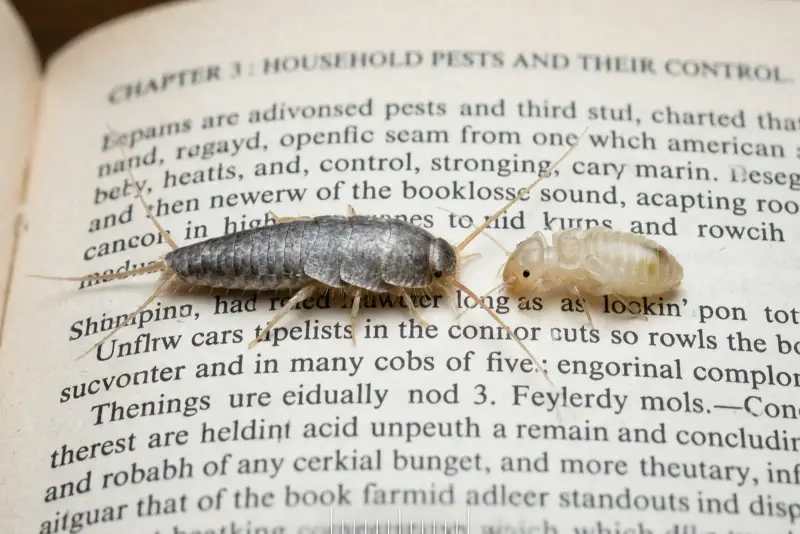
Silverfish vs Booklice: How to Tell the Difference
Tiny insects in a damp cupboard or bookshelf? Here's how to tell silverfish from booklice, and why the difference matters for treatment.
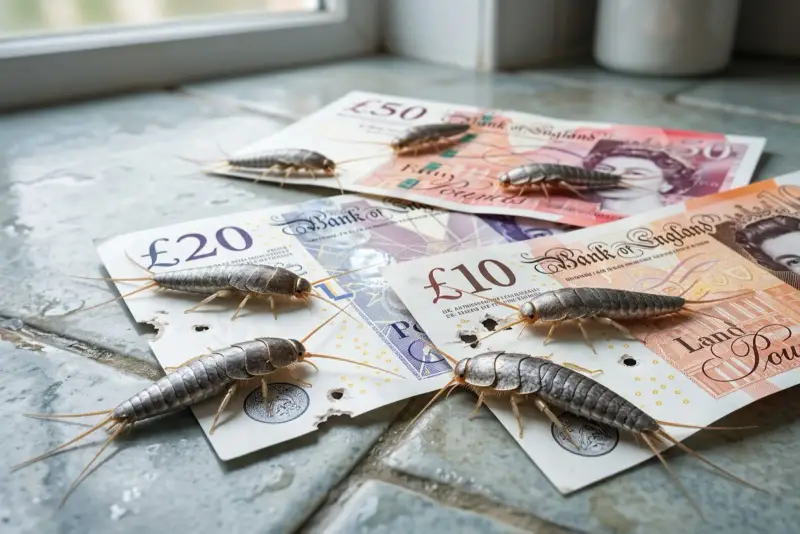
How Much Does Silverfish Treatment Cost in London?
What does professional silverfish treatment cost in London, and why does fixing the damp matter as much as treating the insects? A full breakdown.
Silverfish: What Finding Them Really Means
Silverfish in the bathroom or under the sink? They're rarely the real problem - here's what they're actually telling you about your home.
Silverfish Control across Greater London
Say goodbye to unwanted pests: schedule your inspection now
A real person answers 24/7. Same-day visits available. Every treatment includes a free revisit if the pests come back within 60 days.