
Pharaoh Ant Control London
- Same-day and next-day visits
- BPCA certified technicians
- Free revisit within 60 days
Get a free pharaoh ant control quote
We call you back within 15 minutes, day or night. Quotes are free.
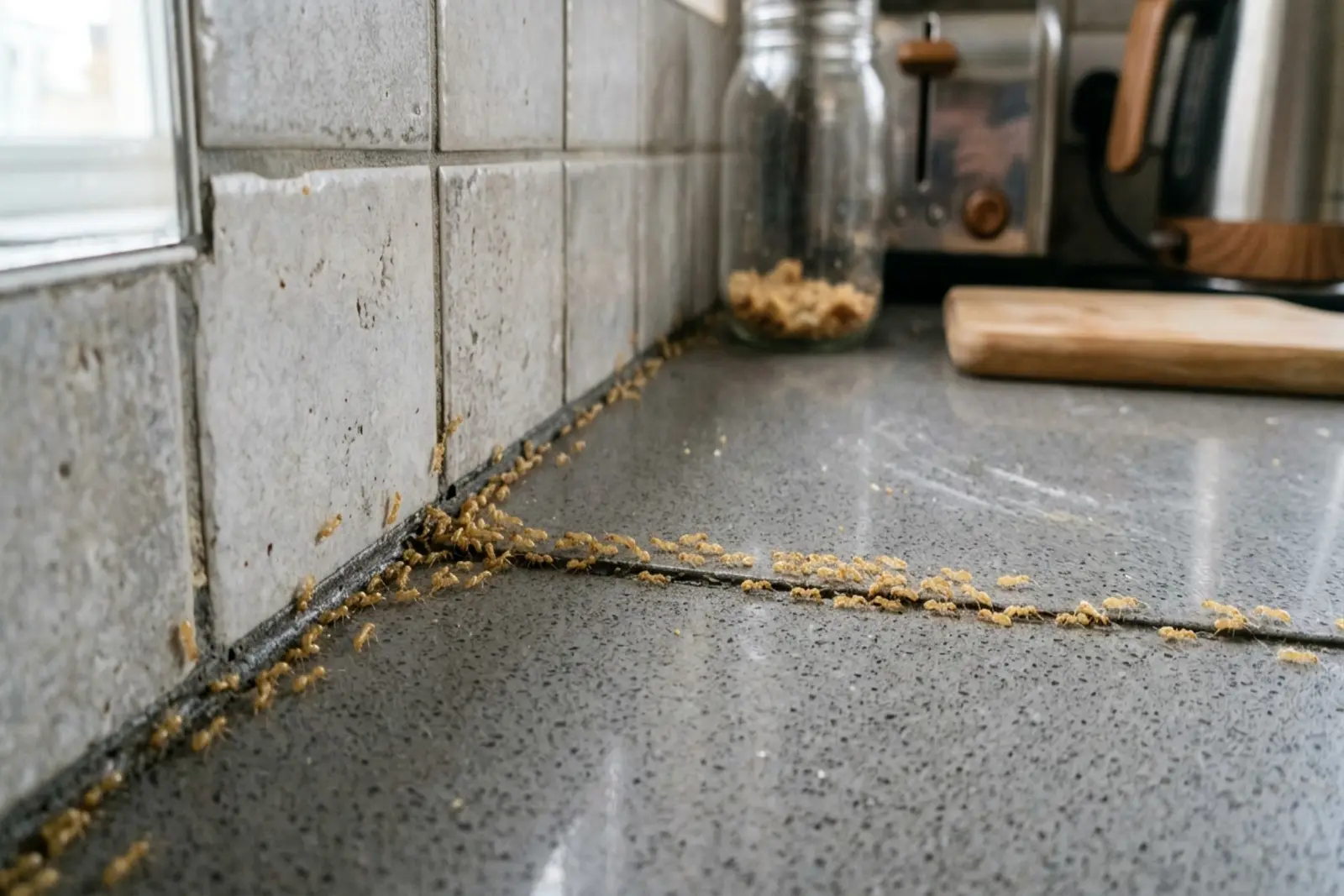
Pharaoh ants are a different problem entirely from the garden black ants most Londoners are familiar with. They’re tiny (around 2mm), pale yellow-brown, and thrive indoors year-round in heated buildings - commonly found in blocks of flats with shared heating, hospitals, care homes, and commercial kitchens. Because a single colony can split into multiple new colonies when disturbed, pharaoh ants need a specific, carefully managed approach, not standard ant treatment.
Signs of a pharaoh ant infestation
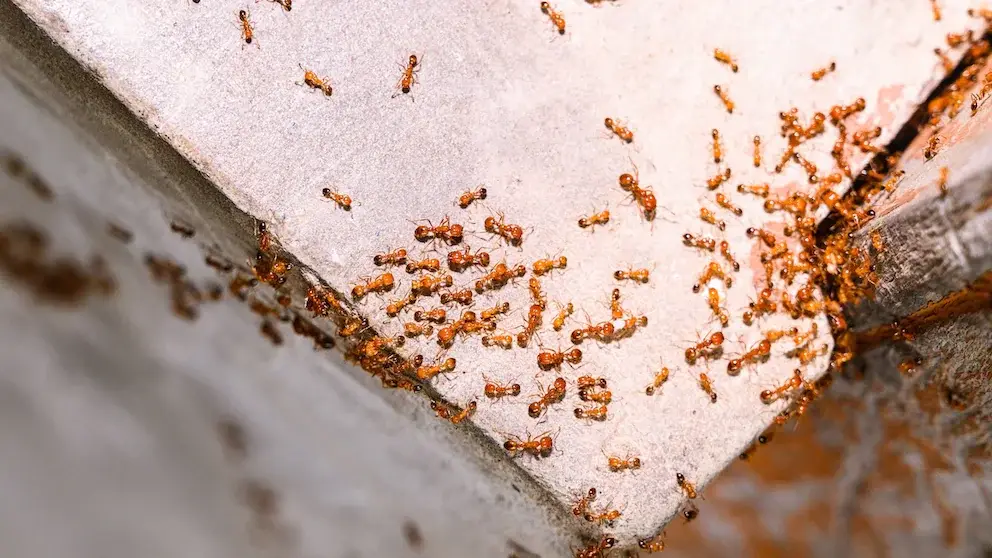
- Tiny, pale yellow-brown ants (noticeably smaller than common garden ants) seen indoors, often in kitchens, bathrooms, or near electrical sockets and heating ducts
- Activity persisting through winter - unlike garden ants, pharaoh ants don’t disappear in cold weather since they nest indoors in heated spaces
- Trails appearing in multiple, sometimes seemingly unconnected areas of a building, especially in flats with shared walls or ducting
- Activity recurring shortly after a standard ant spray treatment (a strong sign it’s pharaoh ants, since spraying often makes this species worse, not better)
Why standard ant spray makes pharaoh ants worse
This is the single most important thing to know about pharaoh ants: spraying disturbs the colony’s chemical trails and can trigger “budding,” where the colony splits into several new, independent colonies that spread to previously unaffected areas. What looks like effective short-term treatment can actually multiply the problem within weeks. Pharaoh ants require patient, targeted baiting, not surface spraying.
Our Pharaoh Ant Control Process
- Inspection and confirmation: identifying the species (critical, since treatment differs completely from garden ants) and mapping activity across the property or building.
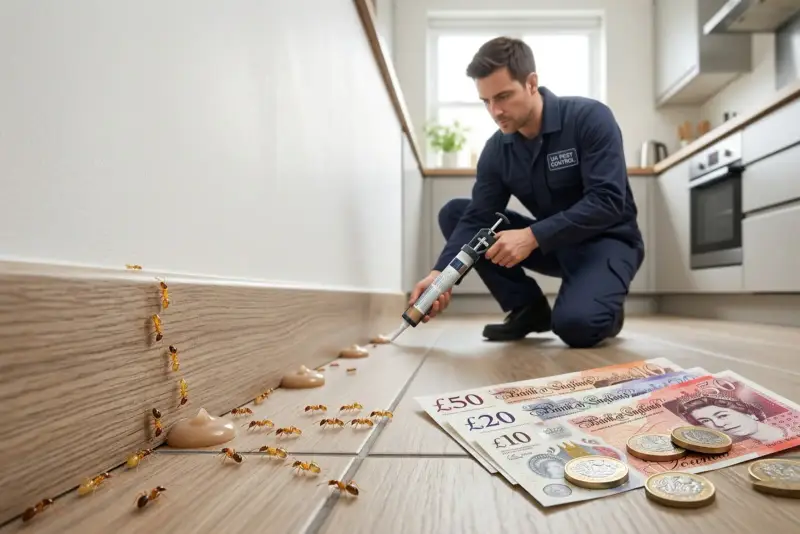
- Non-repellent gel baiting: placed precisely along known trails, allowing workers to carry bait back to multiple colony sites without triggering budding.
- Coordinated treatment across shared buildings: for flats and multi-unit buildings, treatment often needs to be coordinated with neighbouring units or building management, since pharaoh ants move freely through shared wall cavities and ducting.
- Extended monitoring: pharaoh ant programmes typically run over several weeks with multiple visits, since full colony elimination takes longer than with garden ants.
What does pharaoh ant control cost in London?
Pharaoh ant treatment is £260 for a flat and £290 for a house, covering a two-visit baiting programme. If the colony needs more, each extra visit is £70, and we tell you before booking it. It costs more than standard ant control (£190 for a flat, £220 for a house) because pharaoh ants need slow-acting bait placed across the property and a return visit to top it up. In blocks of flats, we tell you on the quote if neighbours need treating too.
Call or send the form and you get a firm price before anything starts. For comparison, standard ant treatment is £190 for a flat and £220 for a house.
Common in These London Areas
Pharaoh ants are most commonly reported in flats with shared heating across Central London and North East London, and in commercial kitchens citywide. Check your area page for local detail, or contact us directly.
Pharaoh Ant Control prices
Pharaoh ants need a return visit to top up the bait, so both visits are in the price. In blocks of flats we tell you on the quote if neighbours need treating too.
| What | Price |
|---|---|
| Flat, 2-visit programme | £260 |
| House, 2-visit programme | £290 |
| Each extra visit, if needed | £70 |
| Survey visit, if needed | £99, taken off the price if you book |
Quotes by phone, WhatsApp or our quote form are free. No extra charge for evenings, weekends or bank holidays, and you pay after the treatment. Every price is on our pricing page.
What happens on the visit
- We confirm they are pharaoh ants: tiny, pale yellow to light brown, often near radiators, hot pipes and kitchens.
- Slow-acting bait goes in many small spots, so workers carry it back to every queen and satellite nest.
- Return visits check uptake and top up the bait over several weeks.
- In blocks of flats, we tell you whether neighbours need treating too, because the colony often spans units.
How to get ready
- Stop all sprays and powders now. They make the colony split and spread.
- Keep food sealed so the ants choose our bait instead.
- Don't clean away the bait points once they are down.
When to call straight away
Call quickly if they appear in a hospital, care home, food business or a block of flats with shared heating. Phones are answered 24/7, and our emergency pest control team can usually be with you the same day.
If they come back
Every treatment includes a free revisit if the same pest comes back to the same property within 60 days, as long as you followed our prep instructions. How the 60-day guarantee works.
Read before you book
Other pests we treat across London
Ant Control
Garden ants, nests and kitchen trails, treated at the source.Bed Bug Treatment
Heat and chemical treatment, priced by the room.Cockroach Control
German and oriental cockroaches in flats, homes and food premises.Flea Control
The whole property treated, not just the pets.Mice Control
Mouse treatment plus proofing so they stay out.Rat Control
Source investigation, bait stations and proofing.Wasp Nest Removal
Same-day wasp nest treatment across London.Moth Control
Clothes and carpet moths, wool and clothing protected.Silverfish Control
Treatment plus advice on the damp that draws them in.Spider Control
False widow specialists for homes and gardens.Squirrel Control
Grey squirrels trapped out of lofts, entry points found.Carpet Beetle Treatment
The real cause of many holes blamed on moths.Commercial Pest Control
Monthly plans for restaurants, shops and offices. Cancel any time.HMO and Hostel Bed Bugs
Room-by-room bed bug plans for landlords and hostels.Frequently asked questions
How do I know if I have pharaoh ants and not garden ants?
Pharaoh ants are noticeably smaller and pale yellow-brown rather than black, and critically, they're active indoors year-round, including winter - garden ants are largely inactive in cold months. If ant activity persists through winter, pharaoh ants are the likely cause.
Why did my previous ant treatment make things worse?
If a standard spray was used on pharaoh ants, it may have triggered "budding," splitting the original colony into multiple new ones. This is one of the most common reasons pharaoh ant infestations appear to spread after DIY or incorrect treatment.
How long does pharaoh ant treatment take?
Programmes typically run over several weeks with multiple visits, since eliminating all colony sites through baiting takes longer than treating a single garden ant nest.
Do I need to coordinate with my neighbours or building management?
Often, yes, in flats and shared buildings - pharaoh ants move through shared walls and ducting, so treating one unit in isolation may only offer a temporary improvement if neighbouring units are also affected.
Can pharaoh ants be a problem in commercial kitchens?
Yes - commercial kitchens, hospitals, and care homes are among the most common pharaoh ant environments due to constant warmth, food availability, and complex ducting, and typically need a tailored commercial treatment plan compliant with food hygiene standards.
Will cleaning get rid of pharaoh ants?
No - while good hygiene reduces food sources, an established pharaoh ant colony requires targeted baiting to eliminate, since cleaning alone doesn't reach the nest sites hidden within wall cavities and ducting.
Is pharaoh ant treatment disruptive to a household or business?
No - gel baiting is discreet and doesn't require evacuating the property or business, unlike some spray-based treatments for other pests.
What happens if I ignore a pharaoh ant infestation?
Colonies continue to grow and can bud into further colonies naturally over time even without disturbance, making the infestation progressively larger and more difficult to fully resolve the longer it's left.
Pharaoh Ant Control across Greater London
Say goodbye to unwanted pests: schedule your inspection now
A real person answers 24/7. Same-day visits available. Every treatment includes a free revisit if the pests come back within 60 days.