
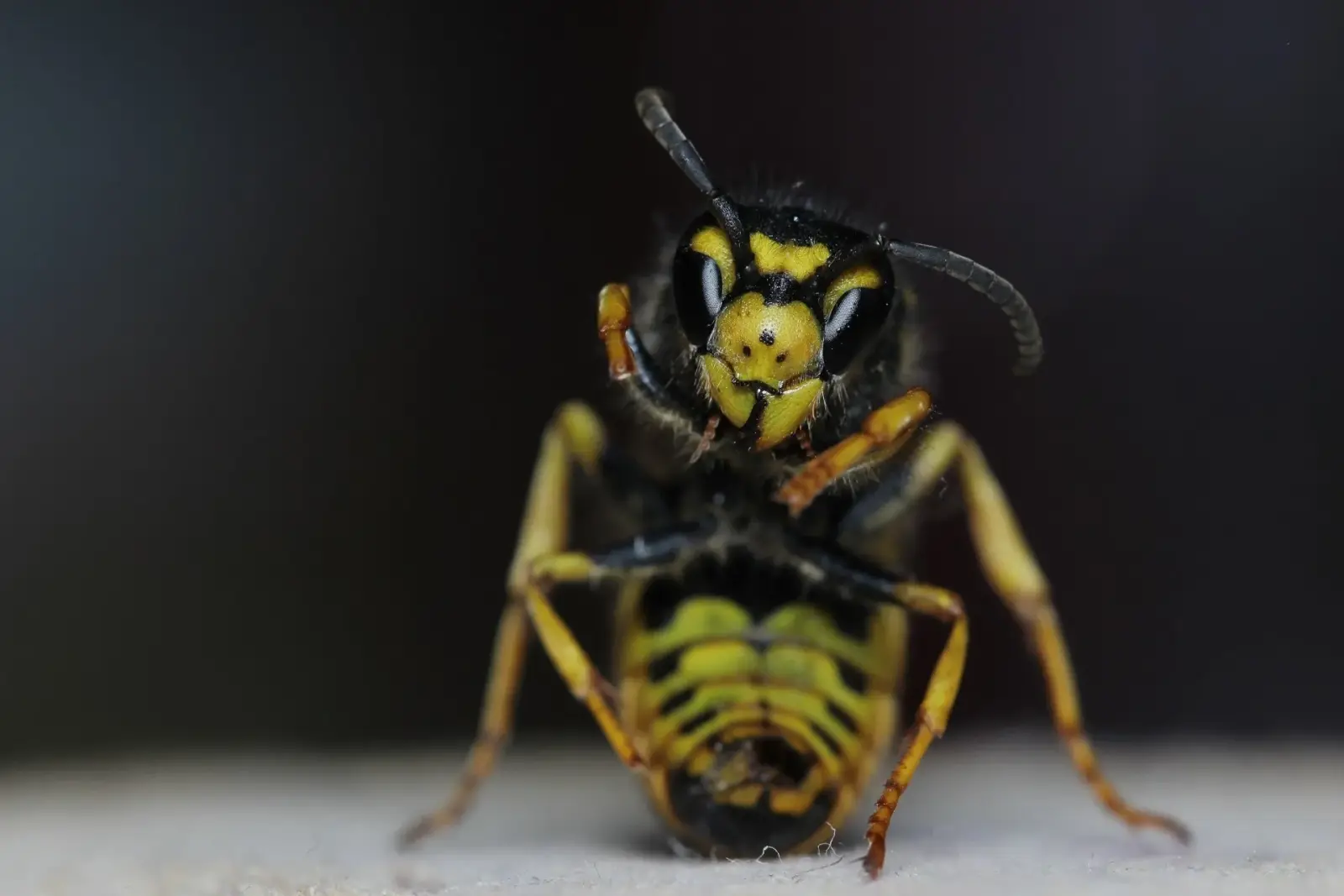
Wasp Nest Removal London
- Same-day and next-day visits
- BPCA certified technicians
- Free revisit within 60 days
Get a free wasp nest removal quote
We call you back within 15 minutes, day or night. Quotes are free.
A wasp nest is one of the few pest problems where speed genuinely matters - nests start small in spring but can grow to hold several thousand wasps by late summer, and the bigger the colony, the more territorial and aggressive it becomes. If you’ve found a nest, the safest and fastest route is professional treatment, not a DIY spray from the local hardware shop.
Signs of a wasp nest on your property
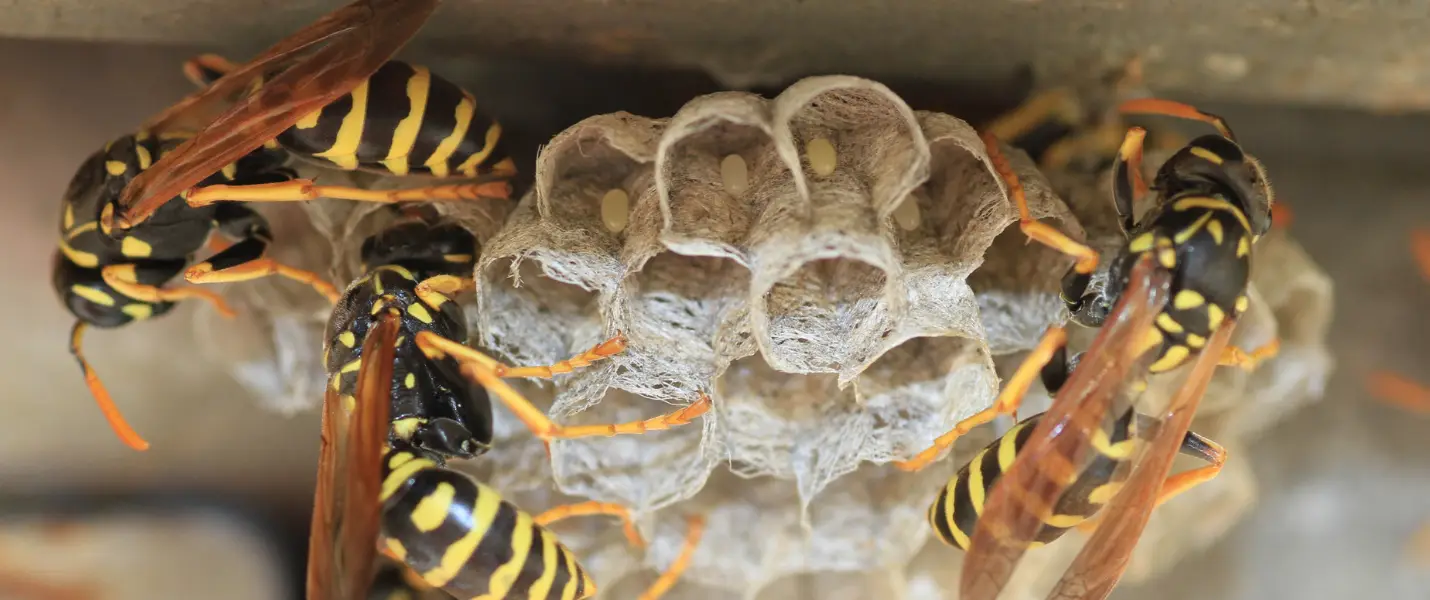
- Regular wasp activity in and out of a single point - a roofline gap, air brick, shed, loft vent, or wall cavity
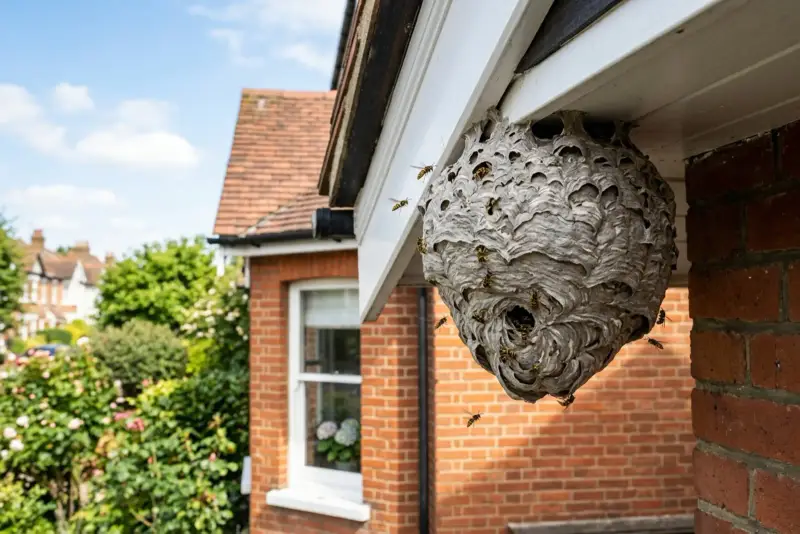
- A visible papery, honeycomb-textured nest in an accessible spot such as a shed, loft, or tree
- A faint buzzing sound from within a wall cavity or loft space
- Increasing numbers of wasps around bins, food, or drinks outdoors as the colony forages
Why DIY wasp treatment is genuinely risky
A mature wasp nest can contain anywhere from 2,000 to 10,000+ wasps. Disturbing a nest without proper protective equipment is one of the more dangerous DIY pest mistakes - wasps, unlike bees, can sting repeatedly, and an aggravated colony will defend the nest as a group. Shop-bought sprays also rarely penetrate deep enough to reach the nest core or the queen, meaning the colony often survives and becomes more defensive afterwards. If anyone in the household has a known allergic reaction to stings, treatment should never be attempted without a professional.
Our Wasp Nest Removal Process
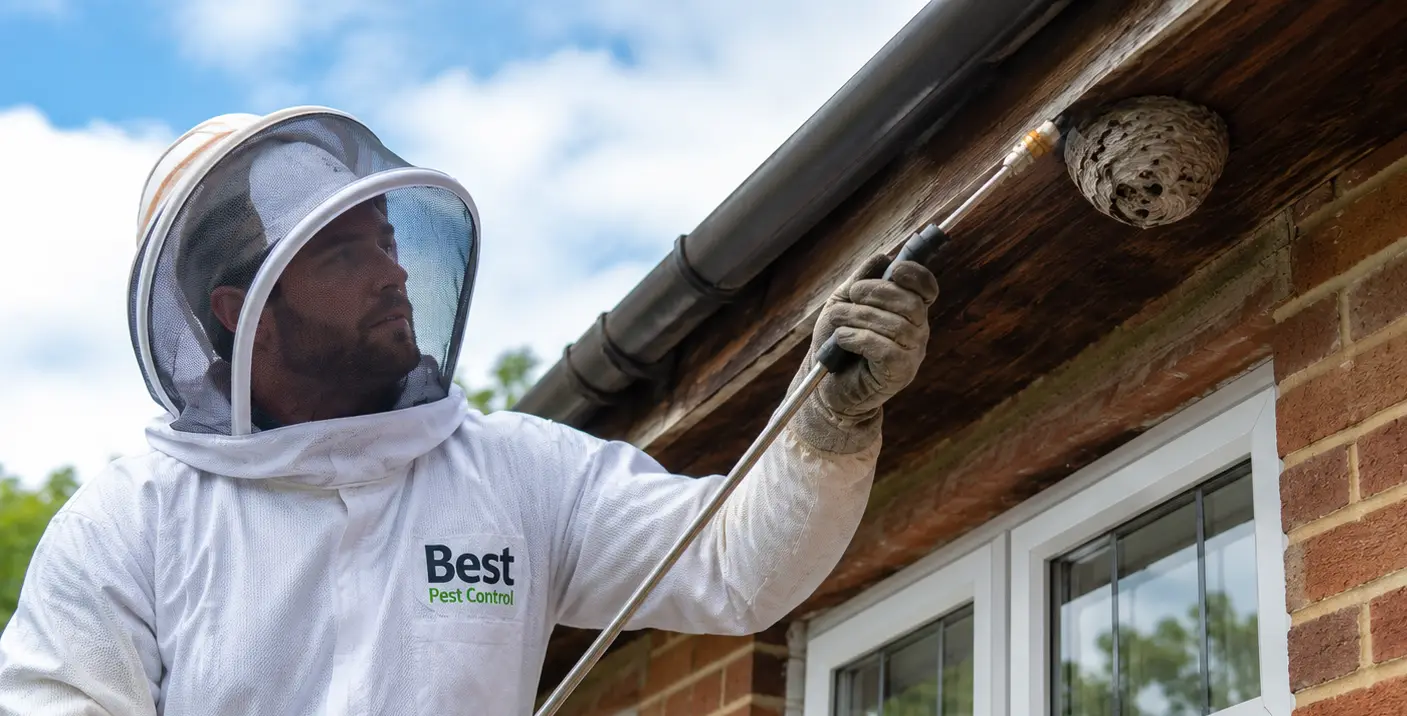
- Assessment - locating the nest and entry point (roofline, loft, wall cavity, shed, or garden structure) and identifying whether more than one nest is present.
- Treatment - insecticidal dust or spray applied directly at the nest entry point using PPE and, where needed, extension equipment for height and access.
- Confirmation - activity typically stops within 24-48 hours of treatment. Wasps never reuse an old nest, so once treated, that location is safe going forward.
- Physical removal - where the nest is visible and safely accessible, we can remove the structure itself; where it’s inside a wall void or roof space, treating the colony at the entry point is usually sufficient and safer than trying to extract the nest physically.
What does wasp nest removal cost in London?
Wasp nest removal is £119. If we find more nests on the same visit, we tell you the price before we treat them. Nests deep in a wall cavity, at height or in an awkward loft can take longer, and we confirm that before starting too. There is no call-out fee on top, and no extra charge for evenings, weekends or bank holidays.
Common in These London Areas
Wasp nests are a frequent seasonal call-out across North West London (larger gardens), South East London (outer suburb gardens), and North East London (suburban housing). Check your area page for local detail, or contact us directly.
Wasp Nest Removal prices
| What | Price |
|---|---|
| Wasp nest removal | £119 |
| More nests found on the same visit | Priced on the day, before we treat |
| Evenings, weekends, bank holidays | No extra charge |
Quotes by phone, WhatsApp or our quote form are free. No extra charge for evenings, weekends or bank holidays, and you pay after the treatment. Every price is on our pricing page.
What happens on the visit
- We confirm it is wasps, not bees. Bees are not destroyed.
- Treatment goes into the nest entrance, which reaches the nest even inside a wall or roof.
- Activity usually stops within a day or two. Wasps returning from foraging may hang around for a short while.
- Where the nest is visible and safe to reach, like a shed or a bush, it can be taken down.
How to get ready
- Keep children and pets away from the entrance.
- Don't block the hole. Trapped wasps can chew through into your home.
- Don't spray it yourself or knock the nest down.
- Tell us where the wasps go in and out, and how high up.
When to call straight away
Call the same day if a nest is near a door, window, play area or anyone with an allergy to stings. Phones are answered 24/7, and our emergency pest control team can usually be with you the same day.
A sting that causes swelling of the face or throat, or trouble breathing, needs 999. See the NHS guidance on anaphylaxis.
If they come back
Every treatment includes a free revisit if the same pest comes back to the same property within 60 days, as long as you followed our prep instructions. How the 60-day guarantee works.
Read before you book
Other pests we treat across London
Ant Control
Garden ants, nests and kitchen trails, treated at the source.Bed Bug Treatment
Heat and chemical treatment, priced by the room.Cockroach Control
German and oriental cockroaches in flats, homes and food premises.Flea Control
The whole property treated, not just the pets.Mice Control
Mouse treatment plus proofing so they stay out.Rat Control
Source investigation, bait stations and proofing.Moth Control
Clothes and carpet moths, wool and clothing protected.Silverfish Control
Treatment plus advice on the damp that draws them in.Spider Control
False widow specialists for homes and gardens.Pharaoh Ant Control
Specialist multi-visit baiting. Spraying makes them spread.Squirrel Control
Grey squirrels trapped out of lofts, entry points found.Carpet Beetle Treatment
The real cause of many holes blamed on moths.Commercial Pest Control
Monthly plans for restaurants, shops and offices. Cancel any time.HMO and Hostel Bed Bugs
Room-by-room bed bug plans for landlords and hostels.Frequently asked questions
How quickly can you treat a wasp nest?
In-season (April to September), we aim for same-day or next-day appointments given how quickly nests grow and how much more dangerous they become once fully established.
Is it safe to stay in the house after treatment?
Yes - we'll advise you on how long to avoid the immediate treatment area (typically a few hours) while residual wasp activity settles, but the rest of the property is unaffected.
Do wasps reuse the same nest next year?
No - once a nest is treated, it won't be reused. New nests can form in different spots the following spring, so it's worth checking known nesting areas (eaves, sheds, loft vents) again each year.
What if the nest is somewhere hard to reach, like deep in a wall cavity?
This is common in London's older housing stock. In most cases we treat directly at the entry point rather than needing to access the nest itself, which resolves the colony safely without needing to open up the wall or roof structure.
What time of year are wasp nests most common?
Activity builds from April, peaks through July and August as colonies reach full size, and tails off by late September as the colony naturally dies out for winter.
Can I treat a wasp nest myself if it's small?
We'd still recommend against it - even a small nest can escalate quickly if disturbed, and without protective equipment, the risk of multiple stings is real, particularly for anyone with an allergy.
How do I know if it's a wasp nest or a bee nest?
Wasp nests have a distinctive grey, papery, honeycomb texture, while bee colonies are typically found in a more compact, waxy comb structure. Bees are also protected and require a different, specialist approach - let us know if you're unsure which you're dealing with.
Will removing one nest stop wasps coming back next year?
It resolves that specific colony, but new nests can form elsewhere on the property the following spring - checking common nesting spots (eaves, sheds, loft vents) each year is a good preventive habit.
Wasps guides from our blog

When Do Wasps Nest in London? A Season-by-Season Guide
Wasp activity follows a predictable seasonal pattern in London. Here's what to expect month by month, and when to act.
Wasp Stings and Allergies: When to Worry
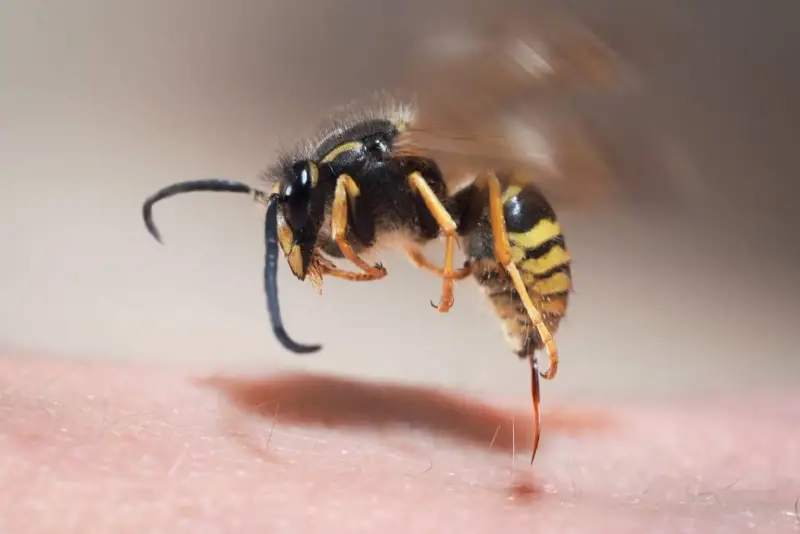
Most wasp stings are painful but harmless. Here's how to tell a normal reaction from a serious one, and when to seek medical help.
Why Wasp Nests Grow So Fast in Summer
A wasp nest can go from a few workers to thousands within weeks. Here's the biology behind the exponential growth, and why early treatment matters.
Wasp Nest Removal across Greater London
Say goodbye to unwanted pests: schedule your inspection now
A real person answers 24/7. Same-day visits available. Every treatment includes a free revisit if the pests come back within 60 days.