
Why Wasp Nests Grow So Fast in Summer

A wasp nest that looked like a small, manageable problem in May can be genuinely alarming by August — and it’s not your imagination. Wasp colony growth follows a real, well-documented pattern that starts slow and then accelerates sharply.

The Slow Start

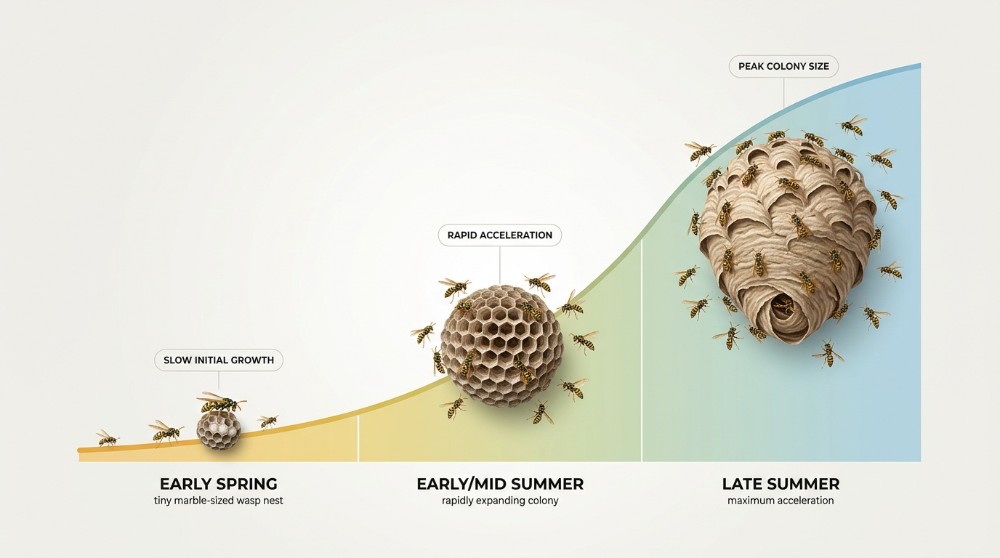
A single queen wasp, having survived winter hibernation, starts a nest alone in early spring — building the first cells and laying the first eggs entirely by herself. For the first several weeks, the colony is genuinely tiny, just the queen and a handful of workers.

Then, Exponential Growth

Once the first workers mature, everything changes. At the beginning of a colony’s life it’s small, with just a few workers — growth is slow until the colony reaches a certain mass, then it becomes almost exponential. Each new generation of workers expands the colony’s capacity to forage and feed the next generation, creating a compounding growth curve rather than a steady, linear one.
What This Looks Like in Real Terms

  • April-May: A handful of workers, nest roughly golf-ball sized — easy to miss entirely
  • June-July: Rapid expansion as more workers hatch and forage, nest growing to tennis-ball or larger
  • August-September: Peak colony size, sometimes several thousand wasps, coinciding with the most aggressive behaviour of the year as natural food sources decline and wasps compete more for what’s left

Why This Makes Early Treatment So Valuable

Treating a nest in May or June, while the colony is still small, is faster, safer, and less disruptive than treating the same nest in August once it’s reached peak size and aggression. A nest that would take a straightforward single visit to treat in spring can represent a genuinely higher-risk job by late summer, simply because of how many more wasps are defending it.
Why Late-Summer Aggression Isn’t Random

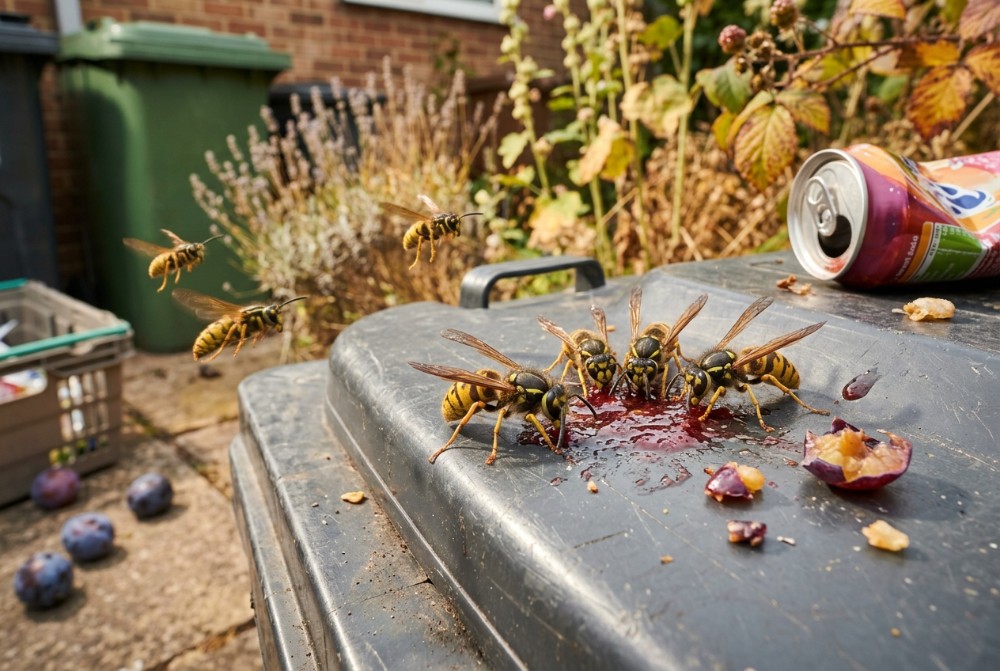
Wasps become noticeably more aggressive in late summer, and this tracks directly with colony biology — as the season winds down and natural insect prey becomes scarcer, wasps shift toward foraging for sugars (which is why they show up at picnics and bins), and the colony becomes more defensive as it nears the end of its annual cycle.


Extermination Process

The Extermination process includes a thorough inspection of your property, sealing off entry points to stop future infestations, using safe and effective pesticides and rodenticides, and providing a warranty.


Say goodbye to unwanted pests — schedule your inspection now

Frequently asked questions

Worth treating promptly if it's somewhere you don't want a nest — spring treatment is genuinely easier and lower-risk than waiting until the colony has grown significantly larger later in the season.


No — colonies naturally decline in autumn as the queen stops laying and the colony winds down for winter, but this is after months of growth and peak aggression, not a reason to leave an active nest untreated through summer.


Colony numbers can vary year to year based on weather conditions during spring (affecting how many queens survive hibernation and successfully establish new nests), which is why some summers feel noticeably "wasp-heavy" compared to others.


If it's in a location you're comfortable with long-term, some very small, low-risk nests can be left, but given how quickly growth accelerates, most nests in or near a home are worth treating while still small rather than waiting.