Bed bugs have made a well-documented comeback across London in recent years, spreading easily through flats, houses, shared accommodation, hotels, and even on the Tube via clothing and luggage. Unlike most household pests, bed bugs aren’t linked to poor hygiene — they hitchhike, and any property can get them.
Because they hide in mattress seams, bed frames, skirting boards, and behind wallpaper, and can survive for months without feeding, bed bugs are one of the few pests where we’d actively discourage relying on DIY treatment alone. Getting this one wrong — disturbing them with the wrong spray, for example — can scatter the infestation into neighbouring rooms or, in flats, neighbouring units.
Small, itchy red bites, often in a line or cluster, typically on areas exposed while sleeping
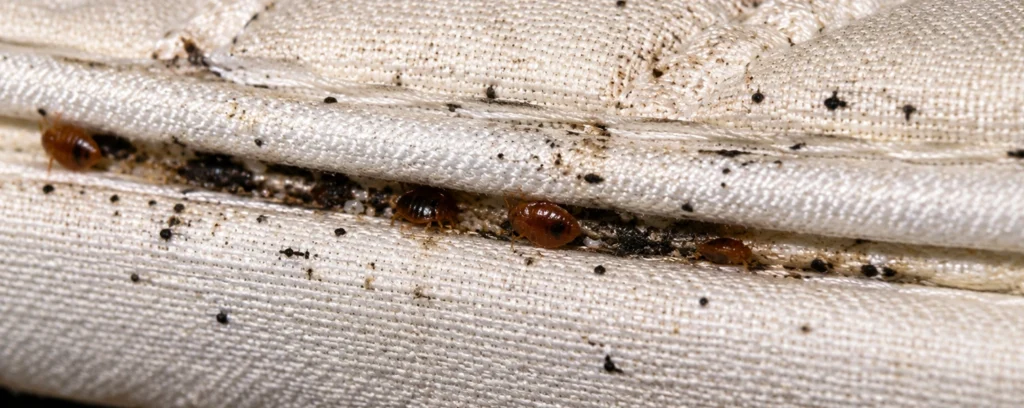
Rust-coloured or dark spots on sheets and mattress seams (bed bug faecal marks)
Tiny pale, shed skins near the mattress piping or bed frame joints
A faint, sweet, musty smell in a heavily infested room
Live bed bugs — reddish-brown, roughly the size of an apple pip — visible along mattress seams, especially when checked with a torch at night
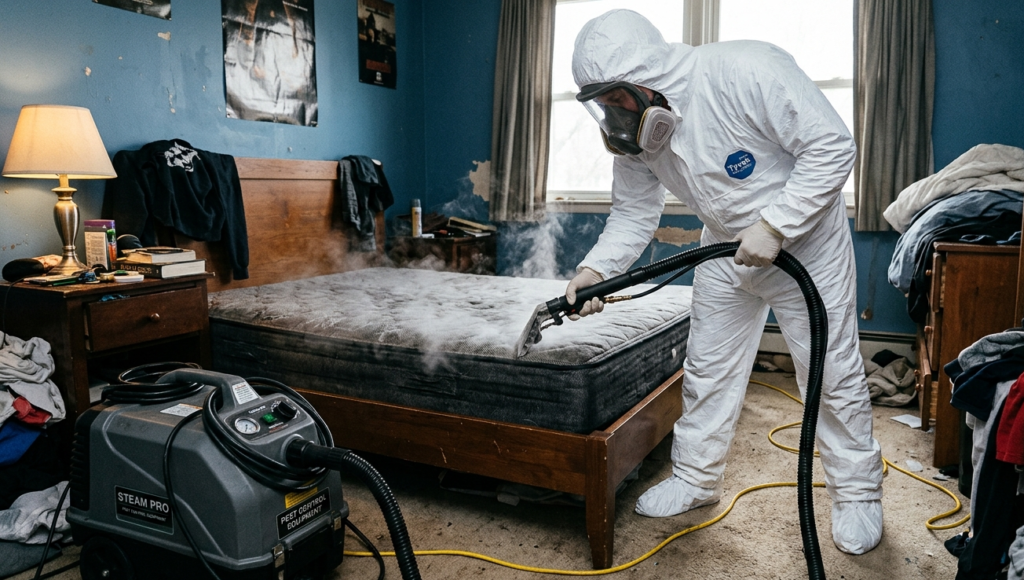
Heat treatment raises the room temperature high enough to kill bed bugs at every life stage — eggs, nymphs, and adults — in a single session, without chemical residue. It’s the fastest option and preferred for properties with children, pets, or anyone wanting a same-day resolution, though it’s typically the more expensive method per room.
Chemical (spray) treatment uses residual insecticide across mattresses, furniture, and cracks/crevices, usually over two to three visits spaced roughly a week or two apart to catch eggs as they hatch. It costs less upfront but takes longer to fully resolve and requires more preparation (washing bedding, decluttering) between visits.
We’ll recommend the right approach after inspection based on the size of the infestation, the property type, and your circumstances.
As a general guide for London in 2026:
Inspection/assessment: typically £60–£100 (often waived or credited if you proceed with treatment)
Chemical treatment: from roughly £250–£400 for a one-bedroom property, rising with property size and number of rooms affected
Heat treatment: typically from £400+ for the first room, as it requires specialist equipment
Full property, moderate infestation: often lands between £750–£1,000 in total once all visits are included
Exact pricing depends on property size, severity, and treatment method — we’ll give you a clear, written quote after inspection, with no surprise add-ons.
Inspection — checking mattress seams, bed frames, skirting, sockets, and furniture joints to confirm the infestation and assess severity.
Preparation guidance — clear instructions on what to wash, bag, or move before treatment (this step significantly affects success rates).
Treatment — heat or chemical application to all affected areas, including furniture, not just the bed.
Follow-up visits — scheduled to catch any eggs that have since hatched, with monitoring until activity stops.
Bed bugs are a frequent call-out in high-turnover rental housing across East London (new-build flats), North East London (shared and rented accommodation), and Central London hotels and serviced flats. Check your area page for local detail, or contact us directly.