Finding a cockroach in your kitchen is one of the most unsettling pest experiences — and one of the most misunderstood. Cockroaches aren’t a sign of an untidy home; London’s dense housing, shared drains, and older Victorian and Edwardian building stock give them easy routes between properties regardless of how clean any individual flat or house is.
The two species most commonly seen in London homes are the German cockroach (smaller, light brown, breeds fastest, usually found in kitchens near warmth and moisture) and the Oriental cockroach (darker, often linked to drains and damp basement areas). Correct identification matters, because treatment differs between the two.
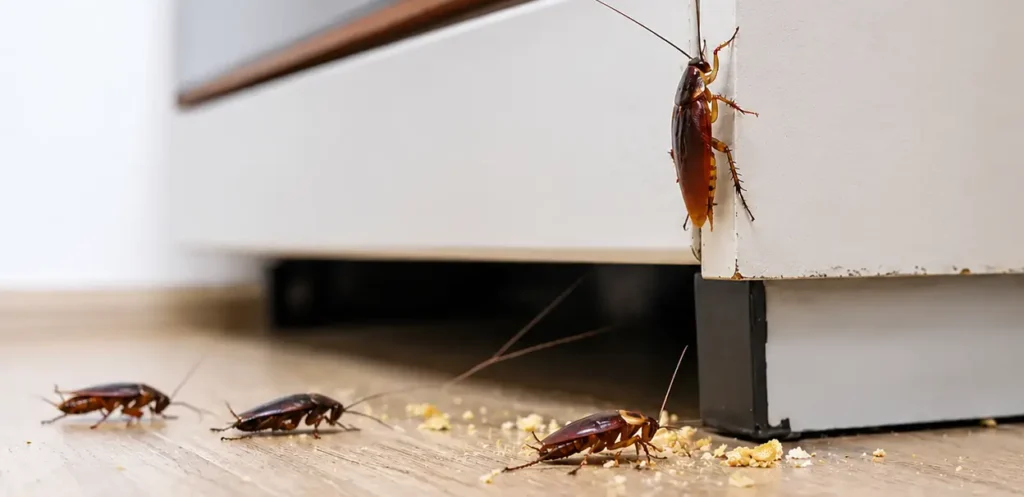
Live cockroaches seen at night (they’re nocturnal — spotting them during the day often means the infestation is well established)
Small, dark, pepper-like droppings along cupboard edges, behind appliances, or under sinks
A persistent musty, oily odour in a heavily infested kitchen
Small brown egg cases (oothecae) in hidden, undisturbed spots like the backs of drawers or behind appliances
Smear marks along regular travel routes near pipework or skirting boards
Shop-bought sprays and “bug bombs” are one of the most common reasons infestations get worse rather than better. These products have a strong repellent effect — they don’t kill the hidden colony, they scatter it deeper into wall voids and behind appliances, where it continues breeding out of sight. Effective treatment needs to reach the nest, not just the roaches visible on the floor.
Inspection — identifying the species, locating harbourage areas (behind appliances, under sinks, inside cupboard voids), and assessing severity.
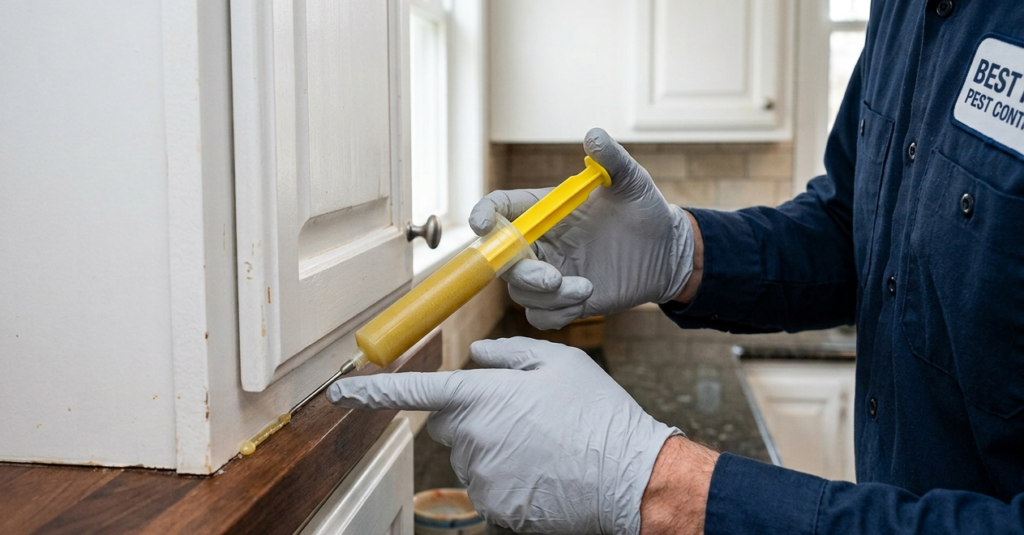
Non-repellent gel baiting — professional-grade bait placed precisely along known foraging routes. Roaches carry the bait back to the colony, which is far more effective than surface spraying.
Insect growth regulator treatment, where needed, to break the breeding cycle so juvenile roaches can’t mature and reproduce.
Sealing and hygiene advice — practical steps to reduce food and water sources and close off entry points, so the problem doesn’t return.
Follow-up visit — to confirm the infestation is fully resolved.
Cockroach activity is a frequent call-out across Central London (restaurants and food premises), North East London (converted period buildings), and East London (older terraces and warehouse conversions). Check your area page for local detail, or contact us directly.