A wasp nest is one of the few pest problems where speed genuinely matters — nests start small in spring but can grow to hold several thousand wasps by late summer, and the bigger the colony, the more territorial and aggressive it becomes. If you’ve found a nest, the safest and fastest route is professional treatment, not a DIY spray from the local hardware shop.
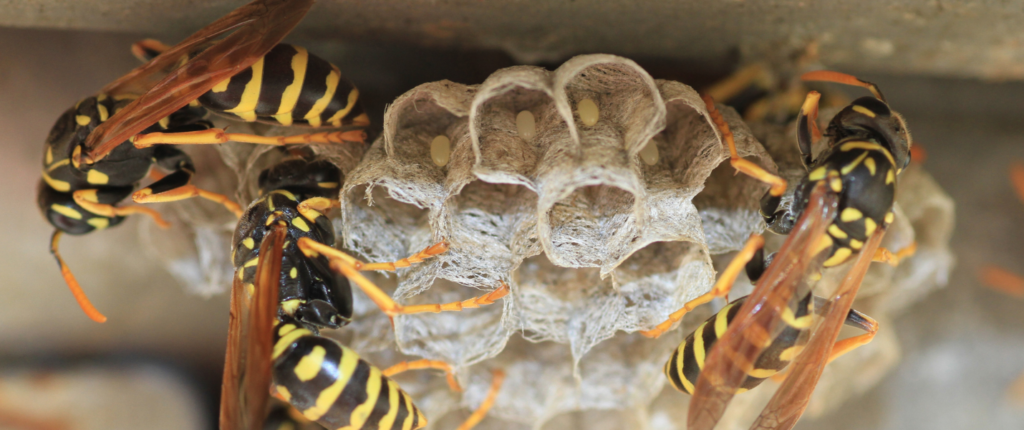
Regular wasp activity in and out of a single point — a roofline gap, air brick, shed, loft vent, or wall cavity
A visible papery, honeycomb-textured nest in an accessible spot such as a shed, loft, or tree
A faint buzzing sound from within a wall cavity or loft space
Increasing numbers of wasps around bins, food, or drinks outdoors as the colony forages
A mature wasp nest can contain anywhere from 2,000 to 10,000+ wasps. Disturbing a nest without proper protective equipment is one of the more dangerous DIY pest mistakes — wasps, unlike bees, can sting repeatedly, and an aggravated colony will defend the nest as a group. Shop-bought sprays also rarely penetrate deep enough to reach the nest core or the queen, meaning the colony often survives and becomes more defensive afterwards. If anyone in the household has a known allergic reaction to stings, treatment should never be attempted without a professional.
Assessment — locating the nest and entry point (roofline, loft, wall cavity, shed, or garden structure) and identifying whether more than one nest is present.
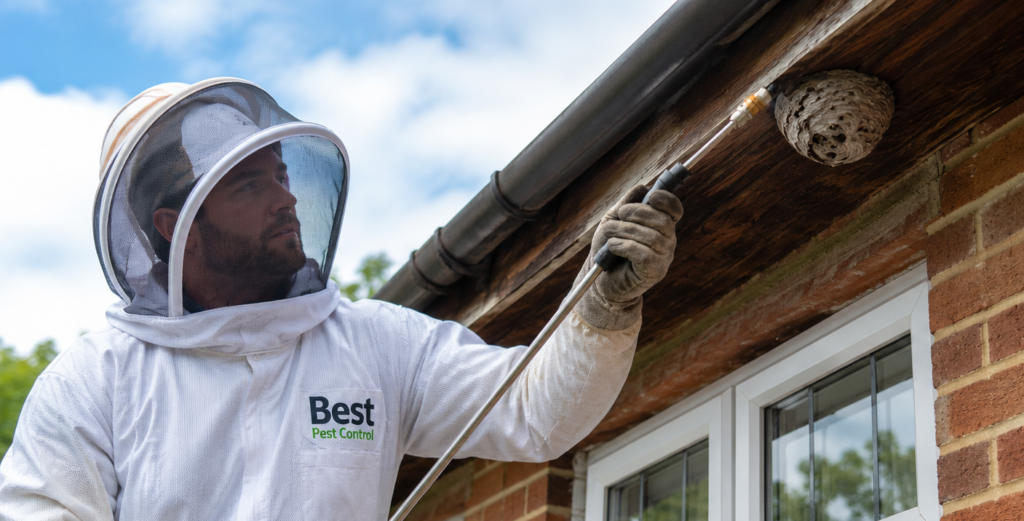
Treatment — insecticidal dust or spray applied directly at the nest entry point using PPE and, where needed, extension equipment for height and access.
Confirmation — activity typically stops within 24–48 hours of treatment. Wasps never reuse an old nest, so once treated, that location is safe going forward.
Physical removal — where the nest is visible and safely accessible, we can remove the structure itself; where it’s inside a wall void or roof space, treating the colony at the entry point is usually sufficient and safer than trying to extract the nest physically.
Wasp nest treatment in London typically starts from around £90–£120 for a single, accessible nest, with additional nests on the same visit usually charged at a reduced rate (roughly £30–£70 each). More complex jobs — nests deep in a wall cavity, at height, or in an awkward loft position — may cost more due to the extra time and equipment involved. We don’t charge a separate call-out fee on top of the treatment price.
Wasp nests are a frequent seasonal call-out across North West London (larger gardens), South East London (outer suburb gardens), and North East London (suburban housing). Check your area page for local detail, or contact us directly.