The two cockroach species most commonly found in London homes look different, behave differently, and need different treatment - getting the identification right before treating saves time and money.
German Cockroach
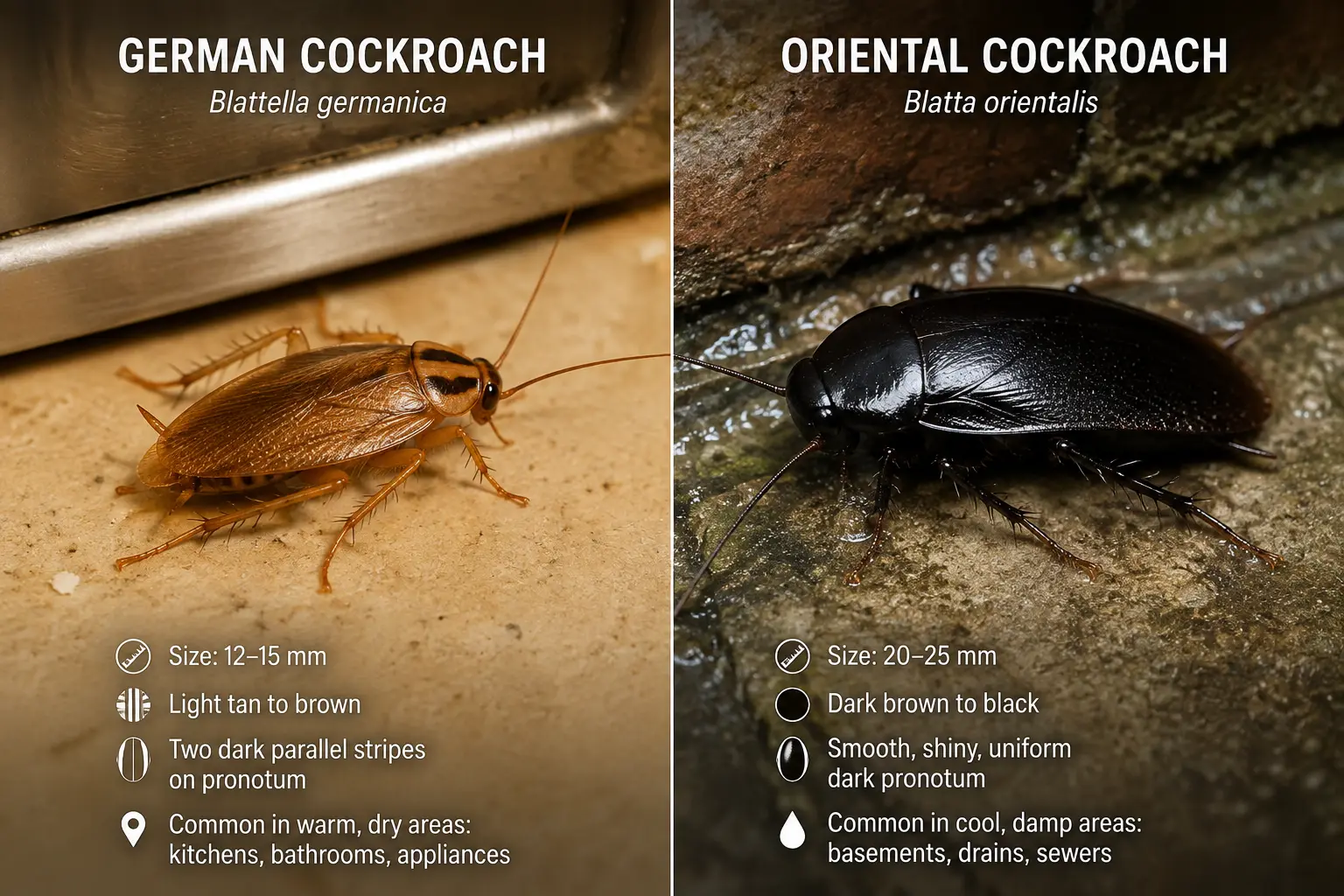
- Appearance: Small (12-15mm), light brown to tan, with two dark parallel stripes running down the back of the head
- Where found: Almost exclusively indoors - kitchens, behind appliances, inside cupboard voids, anywhere warm with food and moisture nearby
- Breeding: Extremely fast - a female can produce dozens of offspring per egg case, and generations overlap, which is why German cockroach infestations can escalate quickly if not treated early
Oriental Cockroach
- Appearance: Larger (20-25mm), dark brown to almost black, with a glossy shell - often mistaken for a beetle
- Where found: Drawn to damp, cooler environments - basements, drains, ground-floor voids - and more likely to have an outdoor component to their presence than German cockroaches
- Breeding: Slower reproductive rate than German cockroaches, and generally a less explosive population growth pattern
The Core Behavioural Difference
German cockroaches live and breed entirely indoors, while Oriental cockroaches more often move in from outside, particularly through damp, low-level entry points. This distinction matters because it changes where treatment needs to focus - deep indoor harbourage sites for German cockroaches, versus entry points and damp-prone areas for Oriental cockroaches.
Why Treatment Differs
German cockroaches respond well to precisely placed gel baiting deep into cracks, crevices, and appliance voids, since the entire population lives indoors and can be targeted directly. Because of their fast breeding cycle, an insect growth regulator is often used alongside baiting to break the reproduction cycle.
Oriental cockroaches need attention to damp conditions and outdoor entry points alongside indoor treatment - addressing moisture sources (leaking pipes, poor drainage) is often as important as the bait itself, since new individuals can continue entering from outside if the underlying damp issue isn’t resolved.
Quick Reference
| German Cockroach | Oriental Cockroach | |
|---|---|---|
| Size | 12-15mm | 20-25mm |
| Colour | Light brown, striped | Dark brown/black, glossy |
| Location | Indoors only | Indoor + outdoor |
| Breeding speed | Very fast | Slower |
| Linked to | Warmth, kitchens | Damp, drains, basements |
Need it dealt with?
See how our cockroach control in London works, check every price in full, or get a free quote and we will call you back within 15 minutes, day or night. If the pests come back within 60 days, we return free.
Need cockroaches treated?
See how our cockroach control in London works, what it costs and what is included.