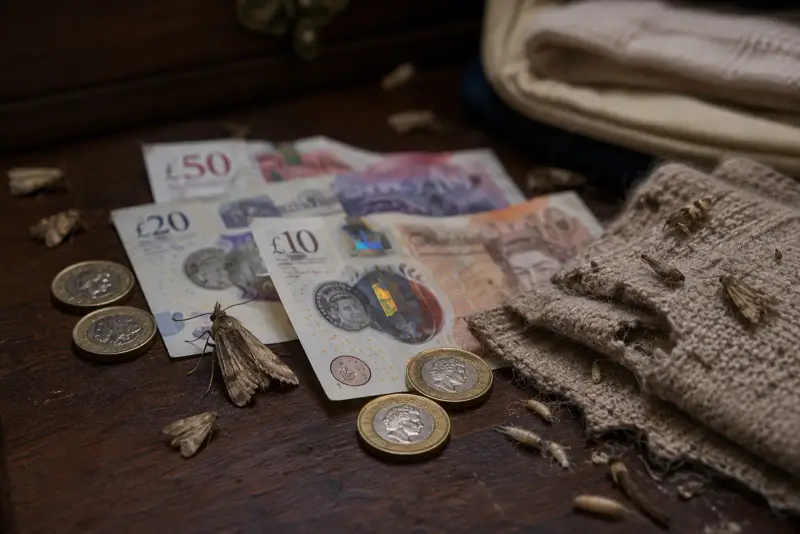
Clothes moths are one of the few pests in London homes that can do real financial damage before you even know they’re there. Unlike most household pests, the adult moths you occasionally see fluttering out of a wardrobe aren’t the problem - it’s the larvae you never see, quietly feeding inside pockets, under collars, and in the corners of rooms for weeks or months at a time.
The Two Culprits: Webbing and Case-Bearing Moths
Almost all London infestations come down to one of two species:
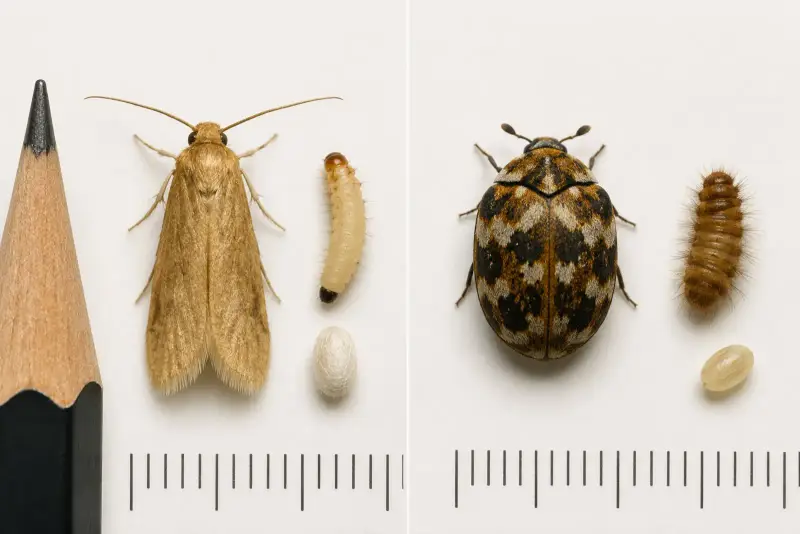
- Common (webbing) clothes moth: golden in colour with reddish hairs on the head, around 6-8mm long. Its larvae spin loose silken threads and webbing as they feed, leaving a telltale trail behind.
- Case-bearing clothes moth: mottled buff to brown, slightly smaller. Its larvae build a small portable case out of silk and fragments of the material they’re eating, dragging it along as they move and retreating inside when disturbed.
Both prefer natural fibres over synthetic ones, which is why moth damage almost always shows up on wool, fur, silk, feathers, or leather rather than polyester or acrylic.
Signs You Actually Have an Infestation
1. Irregular Holes in Clothing or Carpet
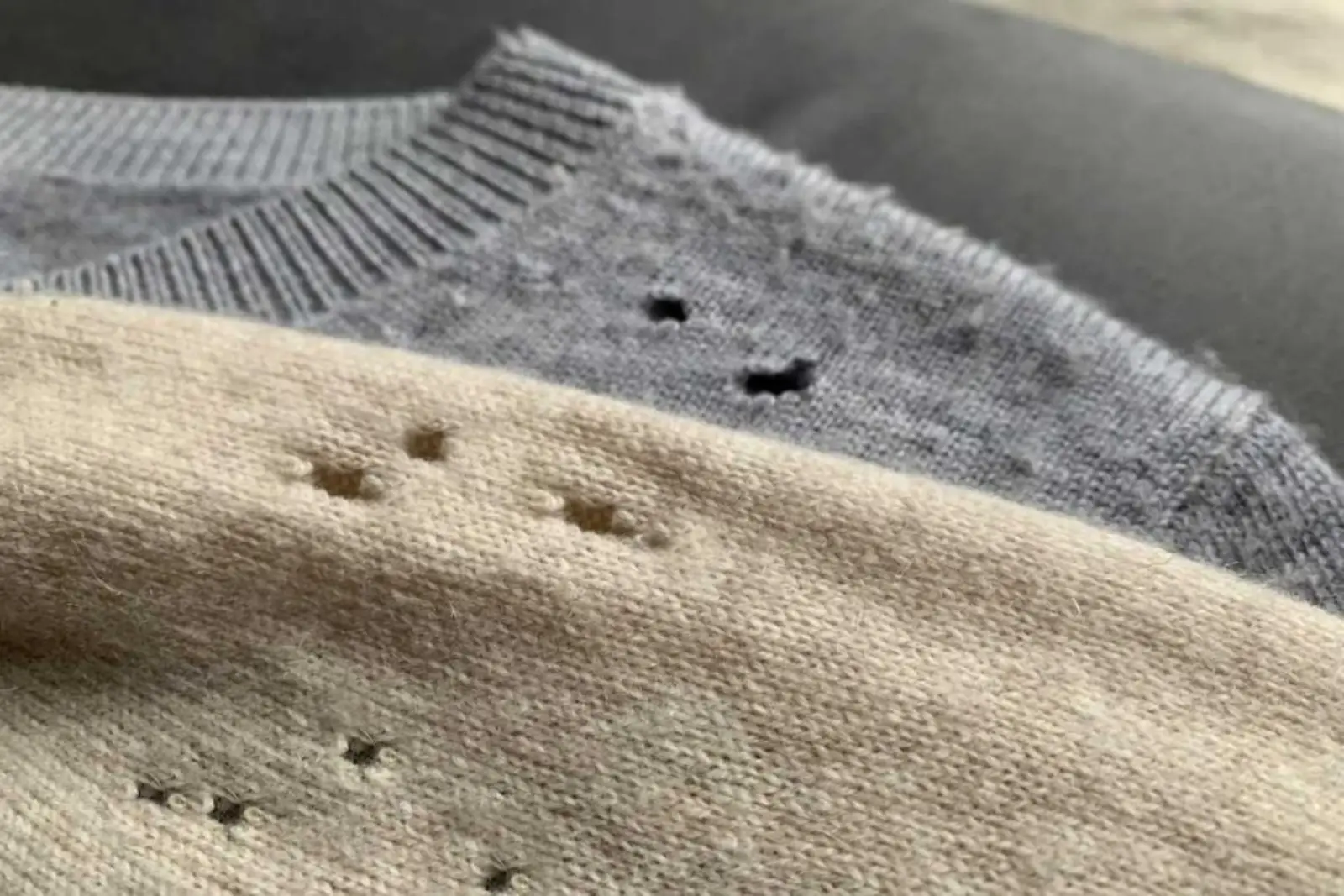
Moth damage tends to appear in places that go undisturbed - under a shirt collar, inside a folded jumper, along a carpet edge hidden under furniture, or on a rug that rarely gets moved. Damage is often patchy and irregular rather than a single clean hole, since the larvae graze across a surface rather than boring straight through it.
2. Silken Webbing or Small Cases
Webbing clothes moth larvae leave loose, fine silk threads on the surface of infested fabric. Case-bearing larvae are easier to spot directly, since they carry a small tubular case - often coloured to match whatever they’ve been eating - that moves with them.
3. Fine Debris or Fecal Pellets
Look closely at the base of skirting boards, inside drawers, or under carpets near furniture legs for tiny gritty debris - a mix of shed larval skins and fecal pellets, usually the same colour as the fabric being eaten.
4. Adult Moths Near Storage Areas
Because adult clothes moths are weak fliers and avoid light, seeing them at all is a useful clue - they tend to stay close to whatever the larvae are feeding on, hiding in dark corners of wardrobes, under beds, or behind furniture rather than flying towards windows or lampshades like most moths.
Where Infestations Usually Start
- Woollen clothing left folded in drawers or storage boxes for long periods
- Carpet edges and rugs, particularly under furniture that’s rarely moved
- Old upholstered furniture, especially pieces with horsehair or wool stuffing
- Areas near bird nests in lofts, eaves, or chimneys - Bromley Council’s pest guidance notes that case-bearing clothes moths are commonly found outdoors as well as indoors, often in the vicinity of birds’ nests, before moving in to feed on stored wool and fabric
- Secondhand or vintage clothing, rugs, and furniture bought without a proper inspection
What To Do If You Spot the Signs
- Isolate and wash or dry-clean any affected items - heat above around 50°C kills eggs and larvae
- Vacuum thoroughly, focusing on carpet edges, skirting boards, and under furniture, then dispose of the vacuum bag or empty the canister outside
- Check any bird nests in the loft or eaves and have them removed if inactive
- For anything beyond a single item or small area, a professional treatment is worth it - moth larvae can be established in more places than are visible on the surface, and DIY sprays often only deal with what you can see
Need it dealt with?
See how our moth control in London works, check every price in full, or get a free quote and we will call you back within 15 minutes, day or night. If the pests come back within 60 days, we return free.
Need moths treated?
See how our moth control in London works, what it costs and what is included.