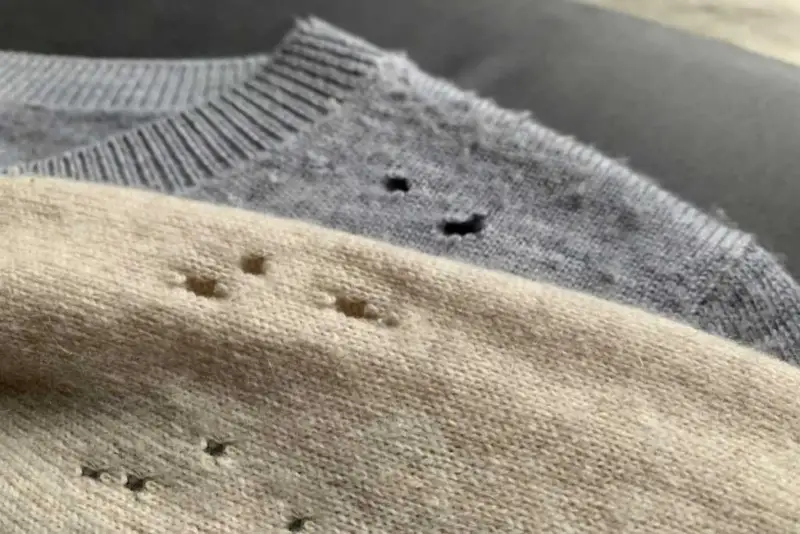
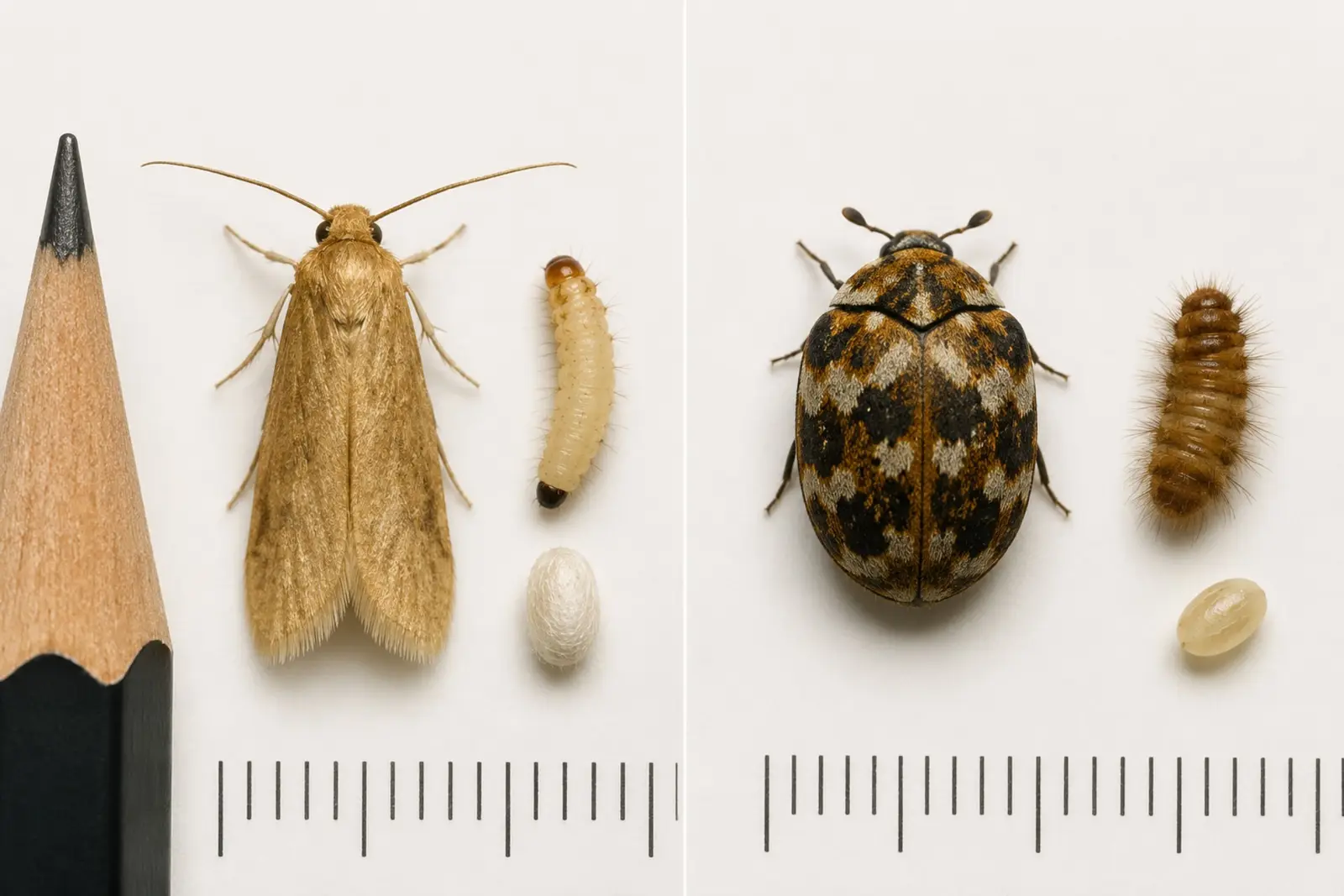
Clothes moths get blamed for almost every hole in a jumper or worn patch in a carpet, but a surprising number of these cases are actually carpet beetles. The two pests feed on the same materials and cause similar-looking damage, which means treating for the wrong one can leave the real infestation untouched. Here’s how to tell them apart.
The Adults Behave Very Differently
This is the fastest way to tell them apart without close inspection. Clothes moths are weak fliers that actively avoid light, staying hidden in dark corners of wardrobes and rarely straying far from where the larvae are feeding. Fareham Borough Council’s pest control guide notes that carpet beetle adults, by contrast, seek out light and live outdoors on plants before wandering or flying indoors, which is why they’re commonly seen on windowsills, particularly in spring, before coming inside to lay eggs.
If you’re finding small, oval, mottled beetles clustered on a windowsill rather than moths fluttering out of a wardrobe, carpet beetles are the more likely culprit.
Comparing the Larvae
| Clothes Moth Larvae | Carpet Beetle Larvae | |
|---|---|---|
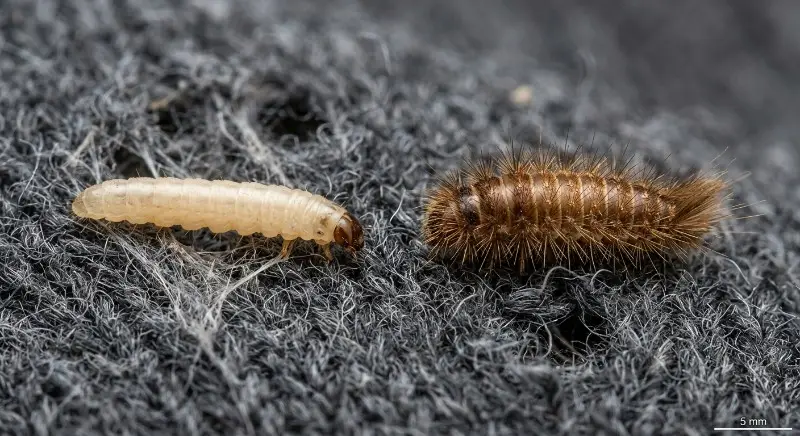
| Appearance | Creamy-white caterpillar, smooth-bodied | Brown and distinctly hairy or bristly (“woolly bear”) |
| Movement | Some species spin a portable silk case | Slow-moving, curls into a ball when disturbed |
| Evidence left behind | Fine silk webbing or threads | Shed, bristly skins left behind after moulting |
| Typical damage pattern | Scattered, irregular holes | Larger damaged area in one section of the item |
Reading the Damage Itself
Clothes moth larvae graze as they move, which tends to leave scattered, irregular holes across a fabric surface. Carpet beetle larvae are less mobile and often stay in one area for longer, which means their damage is more likely to be concentrated in a single large patch rather than spread out. Neither pattern is a guarantee on its own, but combined with what you find nearby - webbing versus shed skins - it’s usually enough to tell them apart.
Where Each One Tends to Start
Both pests are drawn to similar materials - wool, fur, feathers, silk, leather - and both are commonly linked to bird’s nests in lofts or eaves, which act as an outdoor breeding ground before either pest moves indoors. Carpet beetle larvae in particular are frequently found working their way down from a nest via a loft hatch or airing cupboard, which is why an infestation limited to one corner of a top-floor flat is worth checking against the roof space above it.
Why It Matters for Treatment
Moth treatments and carpet beetle treatments both target the affected rooms, but the source needs to match the pest. If carpet beetles are coming from an active bird’s nest in the loft, treating the wardrobe alone won’t stop new beetles arriving, and the nest needs to be removed or dealt with too. A misidentified pest is one of the most common reasons a DIY treatment doesn’t work.
Need it dealt with?
See how our moth control in London works, check every price in full, or get a free quote and we will call you back within 15 minutes, day or night. If the pests come back within 60 days, we return free.
Need moths treated?
See how our moth control in London works, what it costs and what is included.