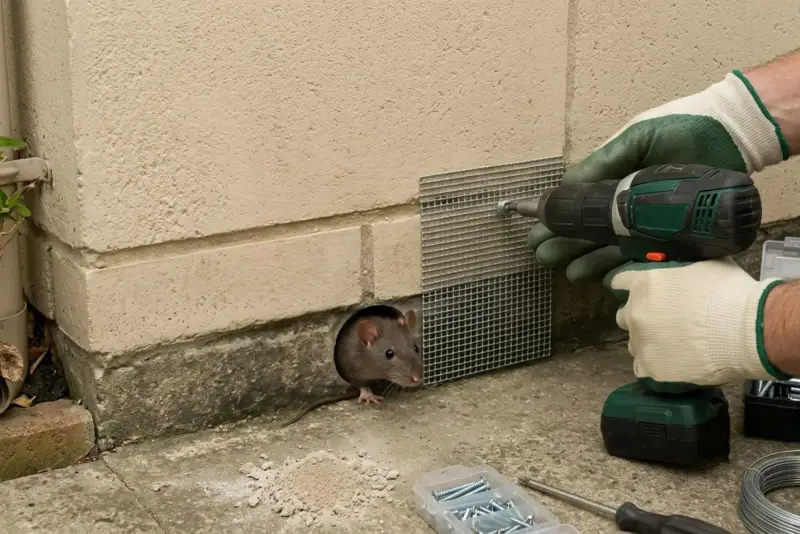
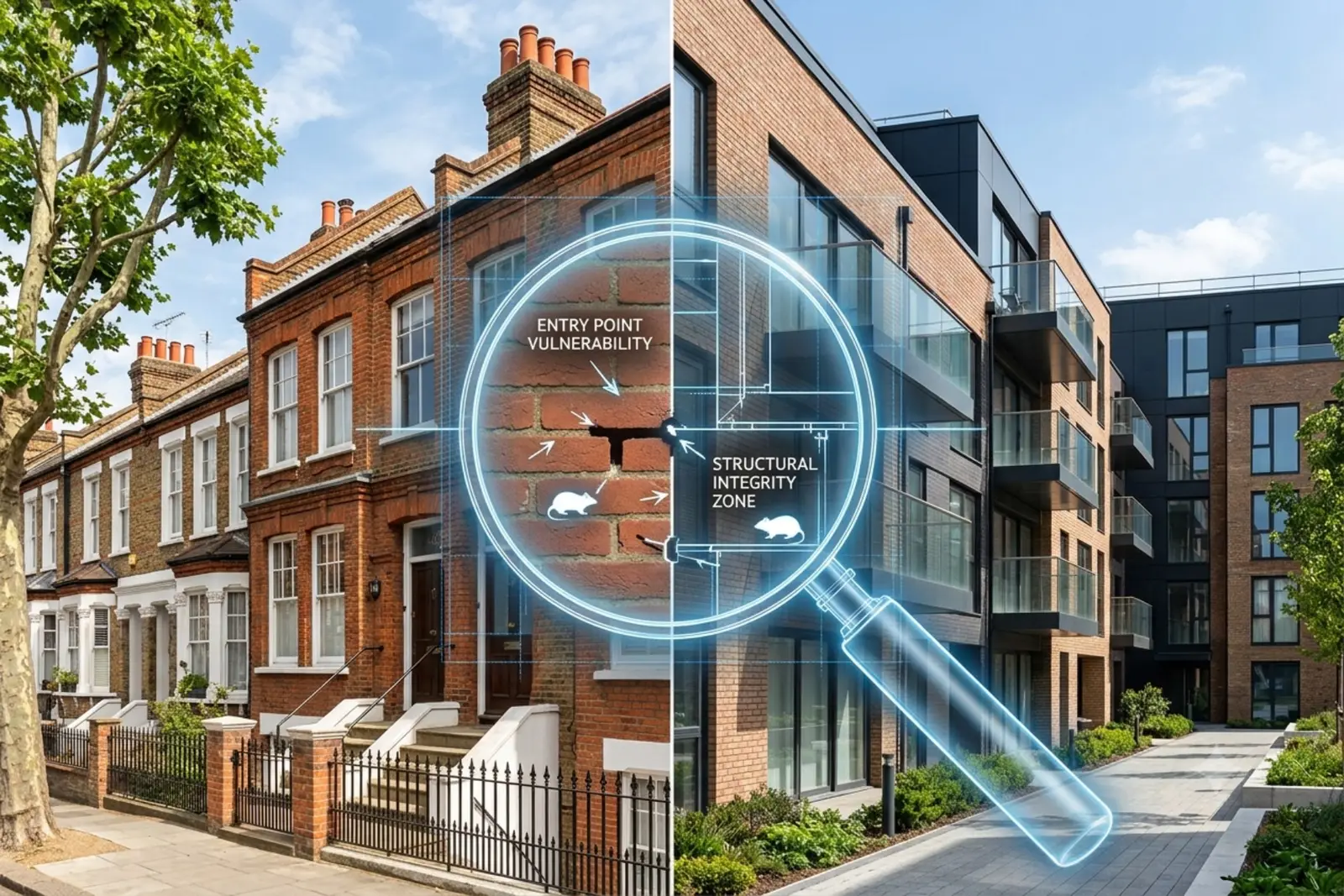
London’s mix of Victorian terraces, converted period buildings, and modern new-build developments means mice find very different routes in depending on what kind of property you’re in. Knowing which applies to you helps target proofing where it actually matters.
Period Homes and Conversions
Older properties - particularly Victorian and Edwardian terraces common across London - tend to have:
- Original brickwork with age-related gaps around window frames, under floorboards, and where extensions meet the original structure
- Shared cavity walls in converted properties, giving mice routes between flats that didn’t exist when the building was a single house
- Original pipework routes with gaps that were never fully sealed, especially where plumbing has been updated over the decades without addressing the surrounding brickwork
Proofing in these properties often means checking multiple potential entry points rather than one obvious gap, since age brings more opportunities for wear.
New-Build Flats
Newer developments have fewer age-related gaps, but bring different risks:
- Service risers and ducting connecting multiple floors can give mice a vertical route through a building that wouldn’t exist in a two-storey terrace
- Shared bin stores and communal corridors in larger developments can be an entry point if not well-sealed at the building’s perimeter
- Construction gaps around new pipework and cabling, sometimes not sealed as thoroughly as they should be during the build itself
Mice in new-builds are often traced to a communal building-level issue (a gap in a shared riser, a poorly sealed bin store door) rather than something specific to one flat - which sometimes means treatment needs coordinating with a managing agent, not just the individual leaseholder.
Why This Distinction Changes the Inspection
In a period terrace, an inspection focuses heavily on the property’s own structure - brickwork, floorboards, original features. In a new-build flat, the inspection often needs to consider the wider building - shared risers, communal areas - since the entry point may not be within the flat itself at all.
What This Means for You
- Period property: expect proofing to focus on your own structure - window frames, floorboards, pipework gaps specific to your unit
- New-build flat: ask your managing agent whether other flats have reported similar issues, since a shared building-level entry point may need addressing at that level, not just within your flat
Need it dealt with?
See how our mice control in London works, check every price in full, or get a free quote and we will call you back within 15 minutes, day or night. If the pests come back within 60 days, we return free.
Need mice treated?
See how our mice control in London works, what it costs and what is included.