
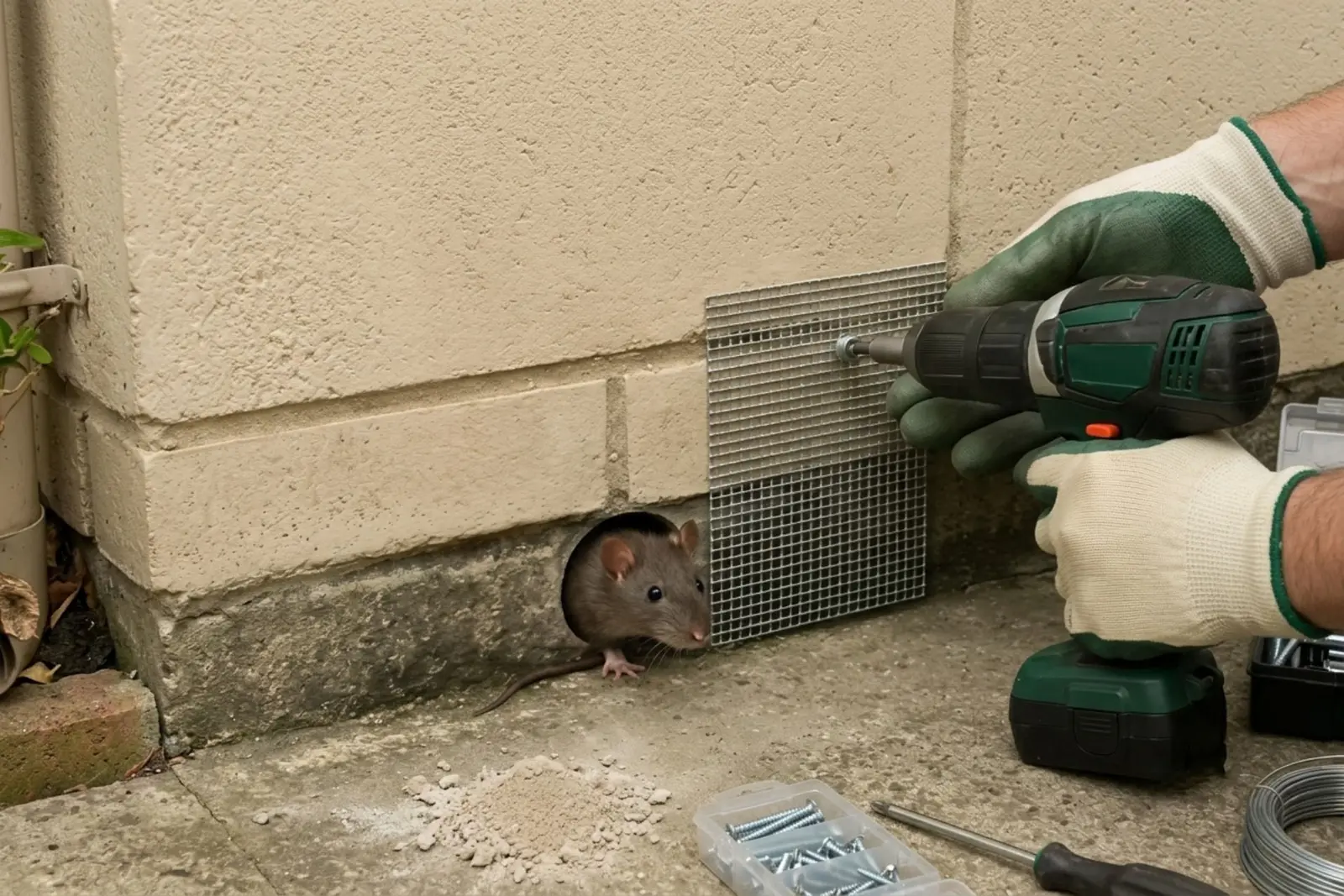
Once mice have been treated, proofing is what actually stops them coming back. Mice can fit through a gap roughly the width of a pencil, so “small” gaps matter far more than they seem. Here’s a room-by-room checklist.
Kitchen
- Gaps around pipework under the sink, sealed with expanding foam or a proper pipe collar
- Gaps behind and beside built-in appliances (ovens, dishwashers) where they meet cabinetry
- Skirting board gaps, particularly at corners and where boards meet the floor
- Any gap where worktops meet the wall
Utility Areas and Boiler Cupboards
- Pipework entry points where they pass through external walls
- Gaps around boiler flue housing
- Any airing cupboard access points behind or beside the boiler
Exterior and Air Bricks
- Air bricks fitted with a proper mesh guard (not blocked entirely - they need airflow, just not mouse access)
- Gaps where extensions or conservatories meet the original structure
- Damaged or missing pointing in brickwork near ground level
Doors and Windows
- Gaps under external doors - a proper draught excluder often doubles as a mouse barrier
- Gaps around older single-glazed window frames, particularly in period properties
- Garage and shed doors, which are common secondary entry points into an attached structure
Loft and Roof Access
- Gaps where roofline meets brickwork
- Vents fitted with mesh rather than left open
- Any gap around where cabling or aerials pass through the roof
What to Use to Seal Gaps
- Wire wool or coarse steel mesh stuffed into gaps before sealing - mice can chew through expanding foam alone, but not steel wool
- Proper pipe collars for pipework penetrations, rather than just foam
- Mesh guards for air bricks and vents, which need airflow but not mouse access
When to Do This
Proofing works best once current activity has been treated and confirmed stopped - sealing entry points during an active infestation can occasionally trap mice inside rather than keep them out. Your technician will confirm the right timing for your specific situation.
Need it dealt with?
See how our mice control in London works, check every price in full, or get a free quote and we will call you back within 15 minutes, day or night. If the pests come back within 60 days, we return free.
Need mice treated?
See how our mice control in London works, what it costs and what is included.