
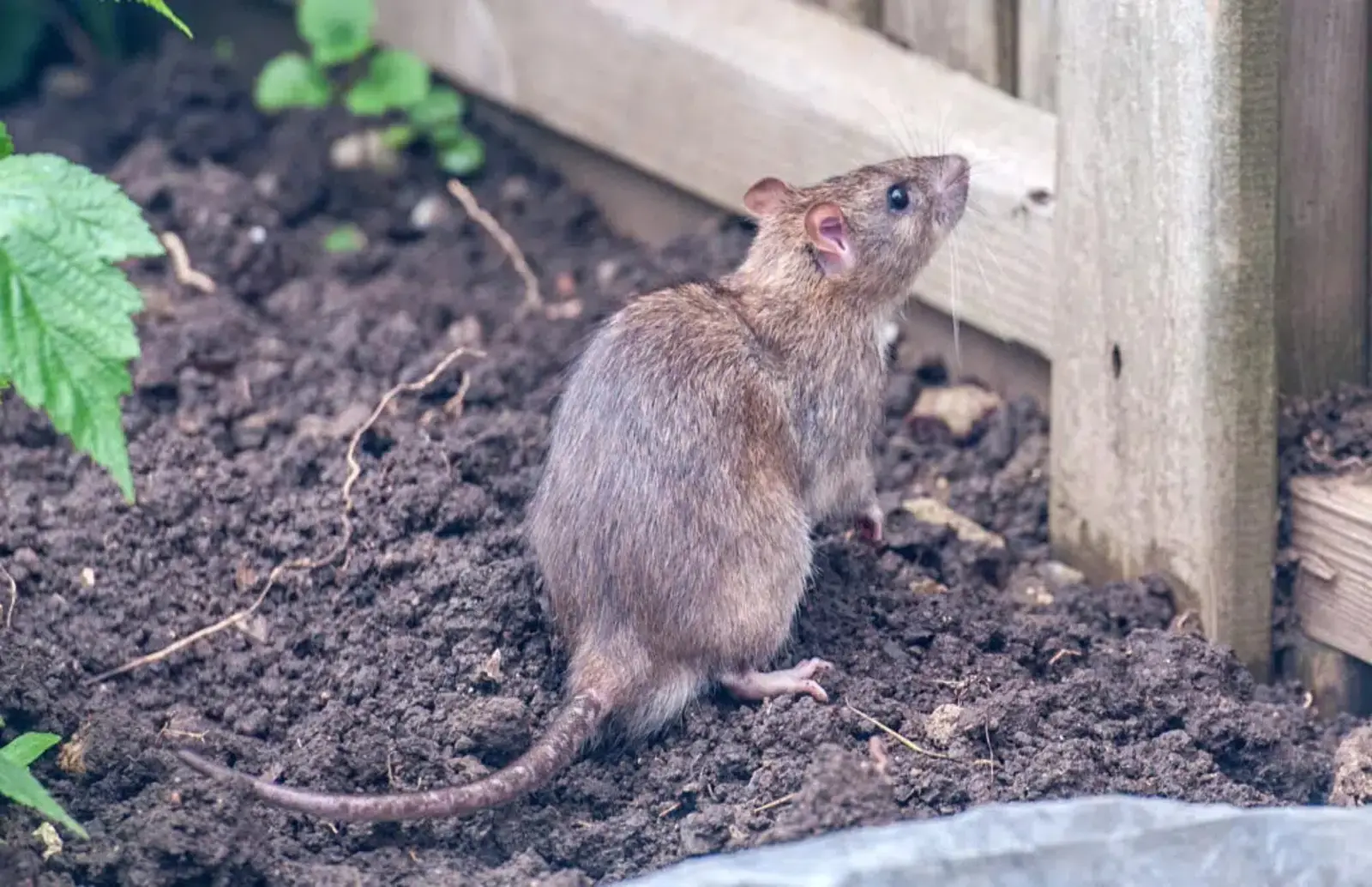
A rat sighting in the garden and one indoors can feel like the same emergency, but they’re often different stages of the same problem - and knowing which you’re dealing with changes what happens next.
Garden Rat Activity: What to Look For
Rats are strong burrowers, and outdoor activity usually shows up as:
- Burrow entrances near fences, sheds, compost heaps, or decking - often a smooth, worn hole roughly the size of a tennis ball
- Greasy rub marks along fence lines or garden walls where rats repeatedly travel the same route
- Gnaw damage to shed timber, decking, or plastic garden furniture
- Activity noticeably increasing near bird feeders, compost bins, or where pet food is left outdoors
Indoor Rat Activity: What to Look For
- Droppings in kitchen cupboards, under sinks, or along skirting boards
- Scratching or movement sounds in walls, under floorboards, or in ceiling voids, usually at night
- Gnaw marks on skirting, wiring, or stored food packaging
- A stale, ammonia-like smell in enclosed indoor spaces where rats are sheltering
Why This Distinction Matters
Garden activity often represents the source - a burrow or nesting site outdoors that hasn’t yet moved indoors. Indoor activity usually means rats have already found a structural gap and are actively using it. Treating only the indoor symptoms while leaving an active garden burrow untreated is one of the most common reasons rat problems seem to “come back” - the source was never actually addressed.
The Most Common Path: Garden First, Then Indoors
Rat activity frequently starts outdoors - a burrow near a shed or compost area - before a structural gap (a damaged air brick, a gap around pipework, storm damage to brickwork) gives access indoors, particularly as colder weather pushes rats to seek warmth. This is why catching garden activity early and treating it can prevent an indoor infestation from developing at all.
What This Means for Treatment
A thorough inspection covers both the garden and the interior, tracing activity back to its likely source rather than only addressing whichever area you happened to notice first. This is also why rat programmes often include outdoor bait stations even when the initial complaint was about noises indoors - the source needs treating, not just the symptom.
Need it dealt with?
See how our rat control in London works, check every price in full, or get a free quote and we will call you back within 15 minutes, day or night. If the pests come back within 60 days, we return free.
Need rats treated?
See how our rat control in London works, what it costs and what is included.