
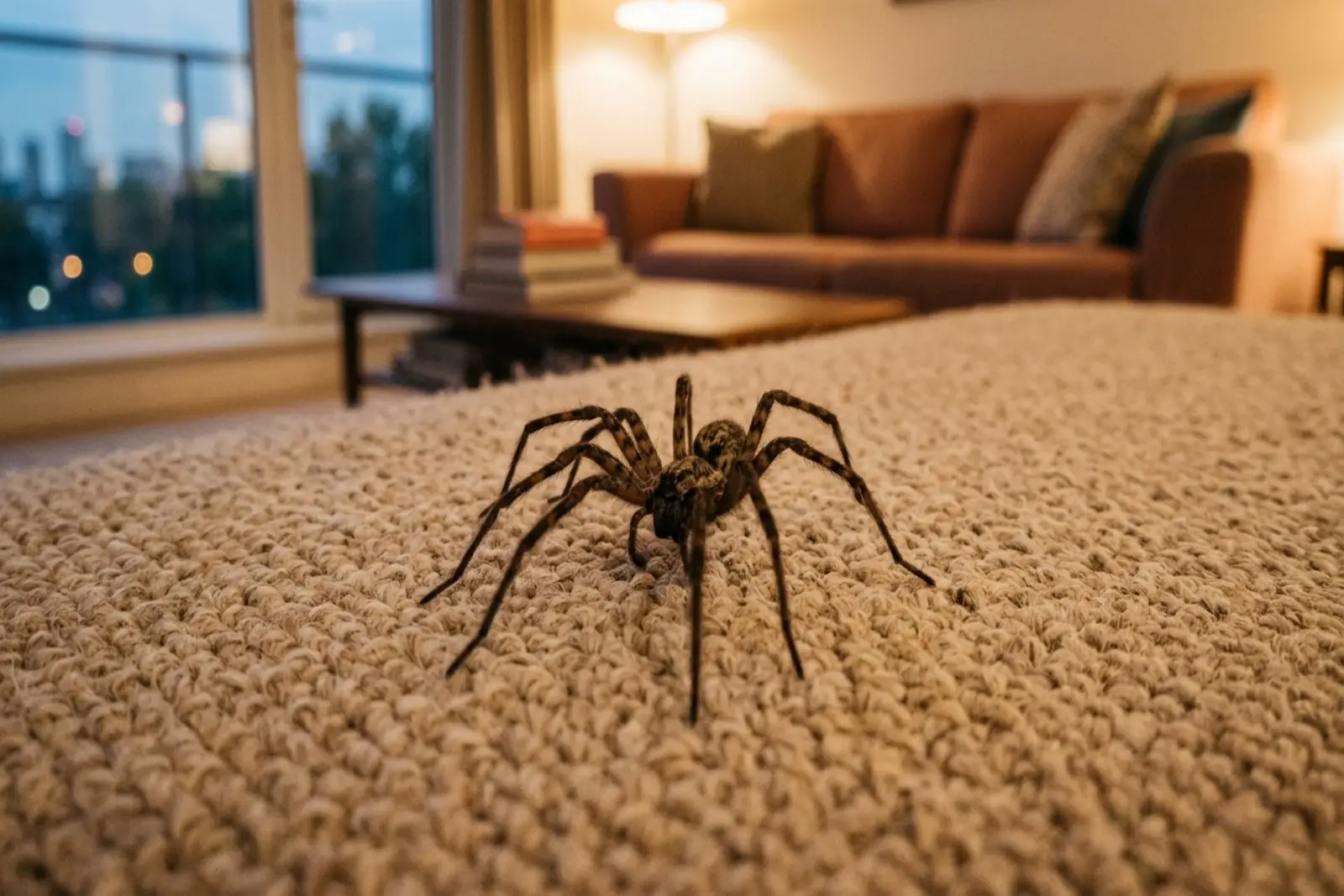
Every autumn, London homes see a noticeable uptick in spider sightings, and every autumn, media coverage tends to frame it as some kind of invasion. The reality is much less dramatic - and understanding what’s actually happening makes the whole thing far less unsettling.
Why Spiders Seem to Appear Out of Nowhere
Spider sightings spike in autumn - roughly late August through to mid-October - for one straightforward reason: this is when many common house spider species reach sexual maturity, and males leave the shelter of their webs to actively search for a mate. Rather than staying tucked away under furniture, they become “roving individuals,” covering far more ground indoors and outdoors than usual, which is why you’re suddenly seeing them crossing the living room floor at night rather than sitting quietly in a corner.
They’re Not Bigger, and There Aren’t More of Them
A common misconception is that autumn spiders are somehow larger or more numerous than at other times of year. In most cases, neither is really true - the spiders were already living in and around the house; they’re simply more visible now because they’re moving around more, and because warmer weather often means doors and windows stay open longer, giving them easier access indoors.
They’re Working in Your Favour
It’s worth remembering that the spiders showing up in London homes this time of year are, almost without exception, harmless and genuinely useful. Leeds Museums and Galleries, whose curators study the museum’s spider collection every autumn, note that spiders are remarkably efficient pest controllers that eliminate insects like mosquitoes and house flies without causing any problems themselves - effectively acting as a free, low-effort form of pest control that most households never think to credit them for.
What To Do If You’d Rather Not Share the House
- Trap and release outdoors using a glass and a piece of card, ideally into a shed, garage, or outbuilding rather than directly outside, since exposed spiders can struggle in the open
- Seal obvious gaps around doors, windows, and pipework if you’d rather reduce entry points than deal with individual spiders
- Keep clutter down in corners and under furniture, since spiders favour undisturbed spaces to hide in
- Avoid squashing them where possible - a spider that’s simply passing through in search of a mate is unlikely to be a sign of an ongoing infestation
Need it dealt with?
See how our spider control in London works, check every price in full, or get a free quote and we will call you back within 15 minutes, day or night. If the pests come back within 60 days, we return free.
Need spiders treated?
See how our spider control in London works, what it costs and what is included.